We sold hours as AI made them cheap
Our offer was production: renders, copy, layouts, campaigns. In the same two years, AI began automating much of that work.
Lesson: sell the system that produces the work, not the hours.

I co-founded Urbo Group, a boutique agency for preconstruction real estate. We ran a luxury launch, chased a platform, and closed. This case shows the work that shipped, what went wrong, and the AI product I would build first now. Try it below.
Preconstruction sales run on documents that change while the building is being sold. Buyers ask the same questions, agents answer by hand, and printed pieces go out of date.
Don’t rebuild the four-portal platform we pitched. Build the one piece the agency already had the inputs for: a concierge that answers from the launch documents and knows when to stop.
Shipped: the launch campaign for an eight-residence luxury building. Built now: a working concierge with six states, including what happens when two documents disagree.
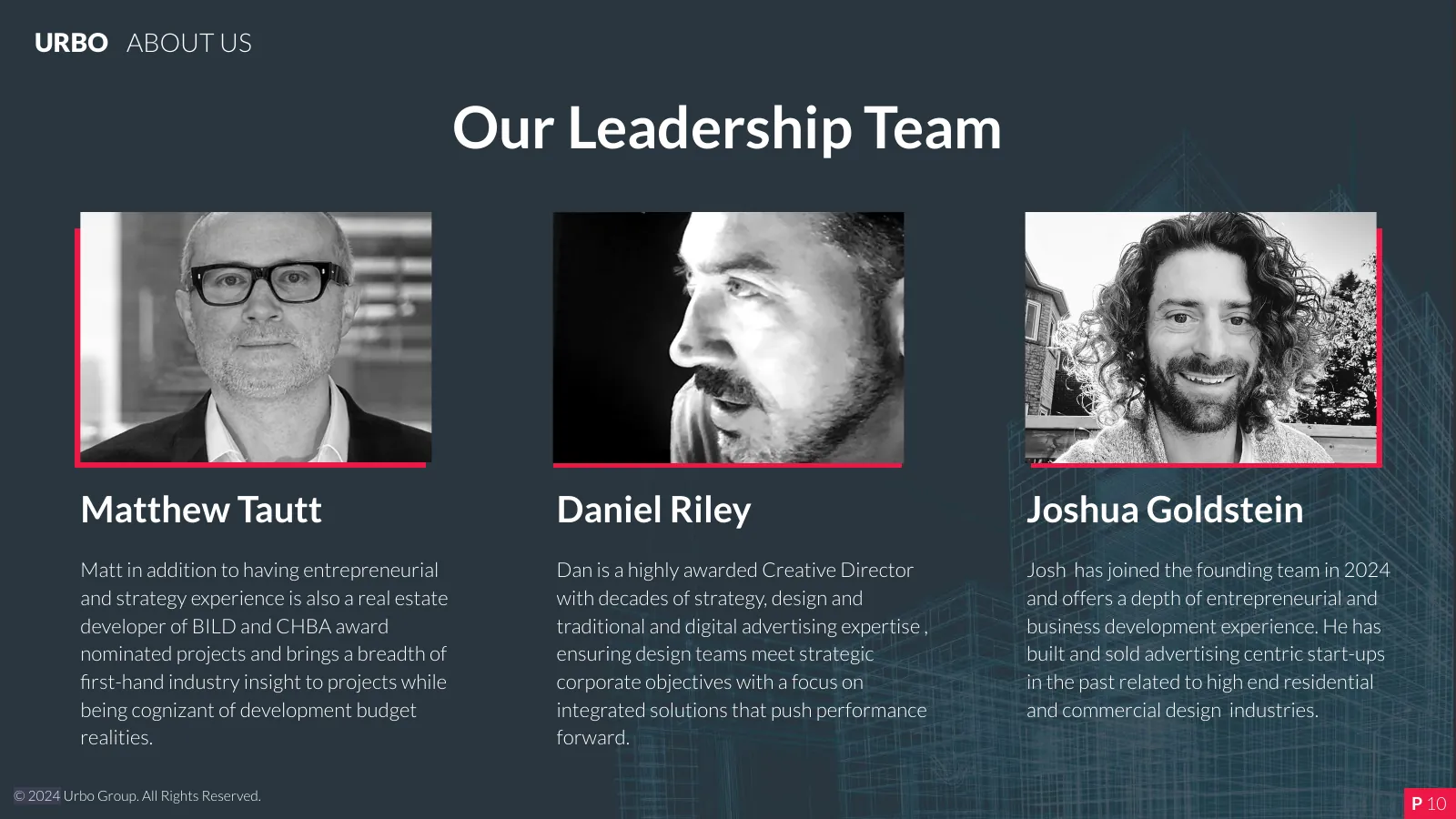
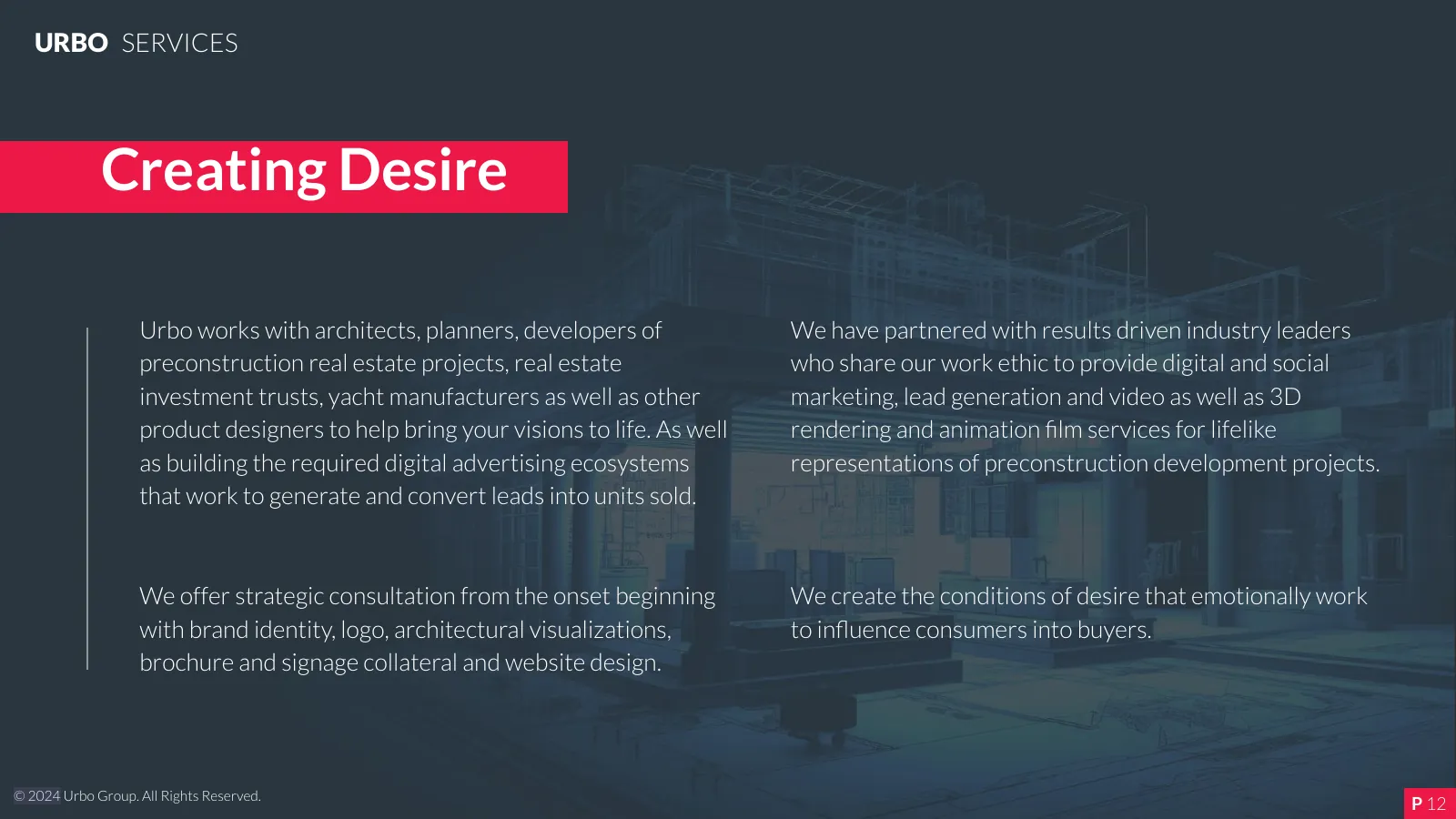
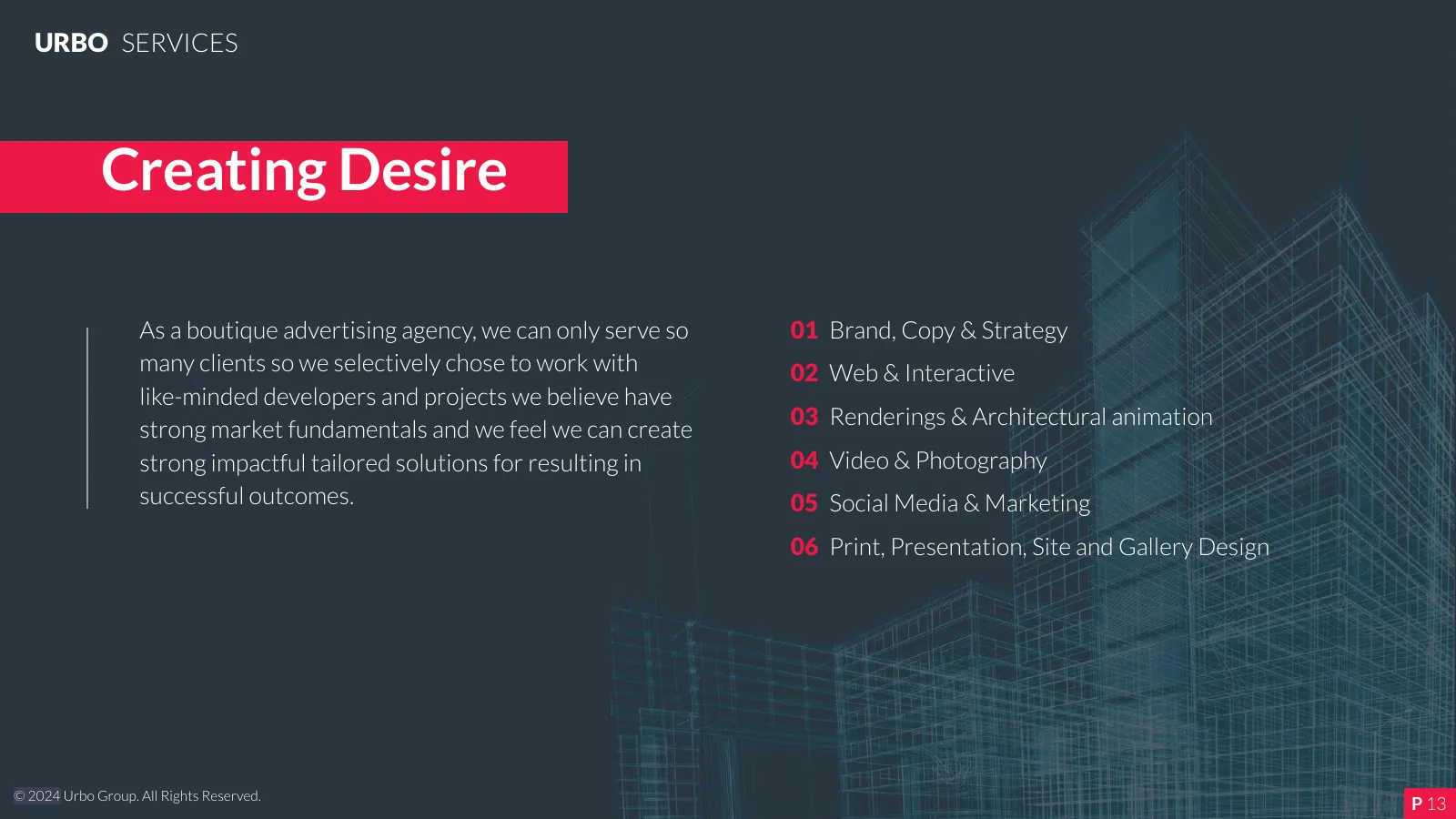
Urbo Group served one vertical: preconstruction real estate. My partner Matthew Tautt develops residential projects; Joshua Goldstein joined to lead business development from Miami. We sold brand, web, renders, video, print and paid media to developers who need to sell units before the first shovel.
I owned creative direction and design: the Urbo brand and site, the sales deck, and the launch pieces for our first project. That project was a Modern Skyline development, Matt’s own company. Matt wrote most of the copy.
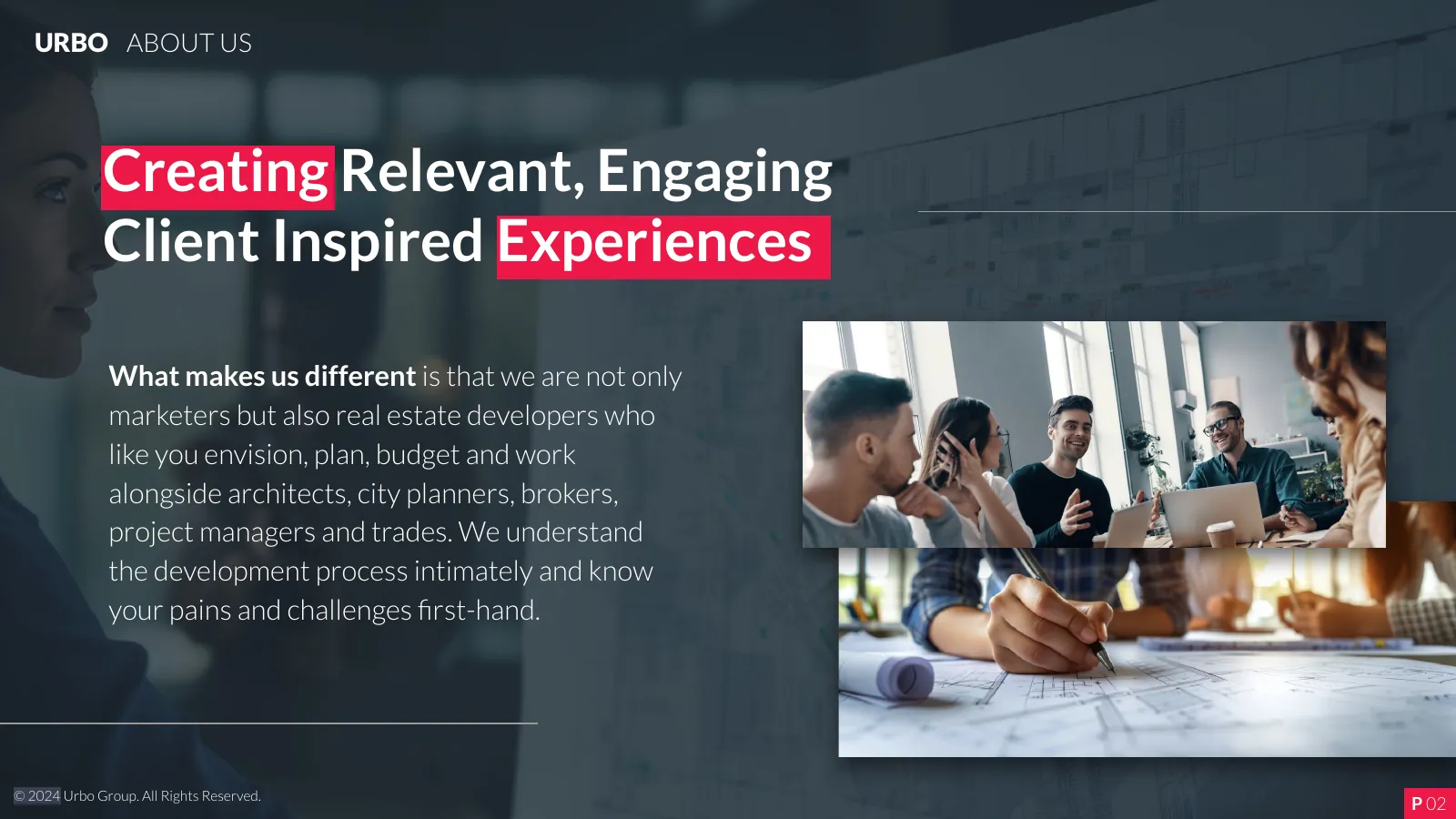
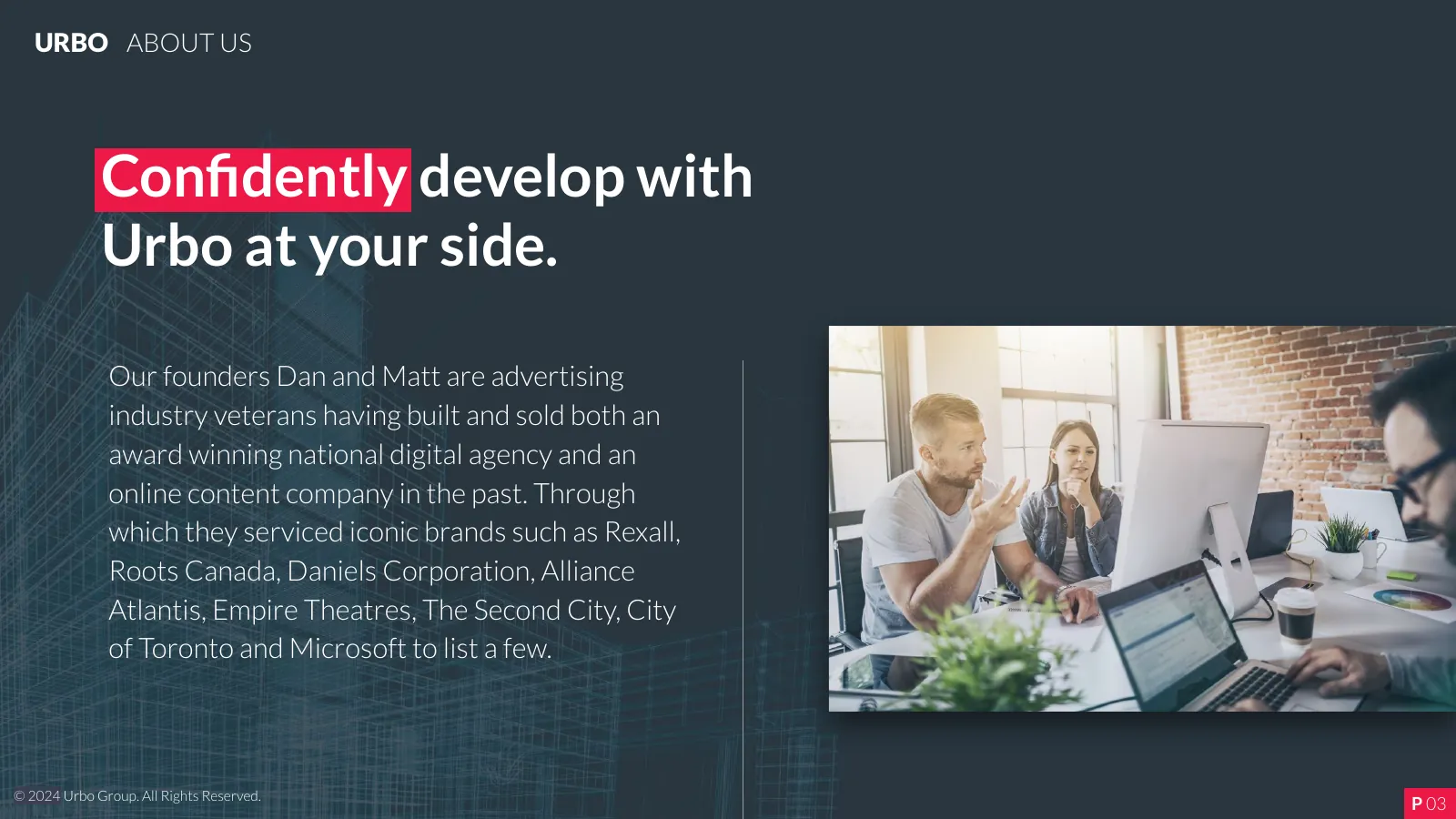
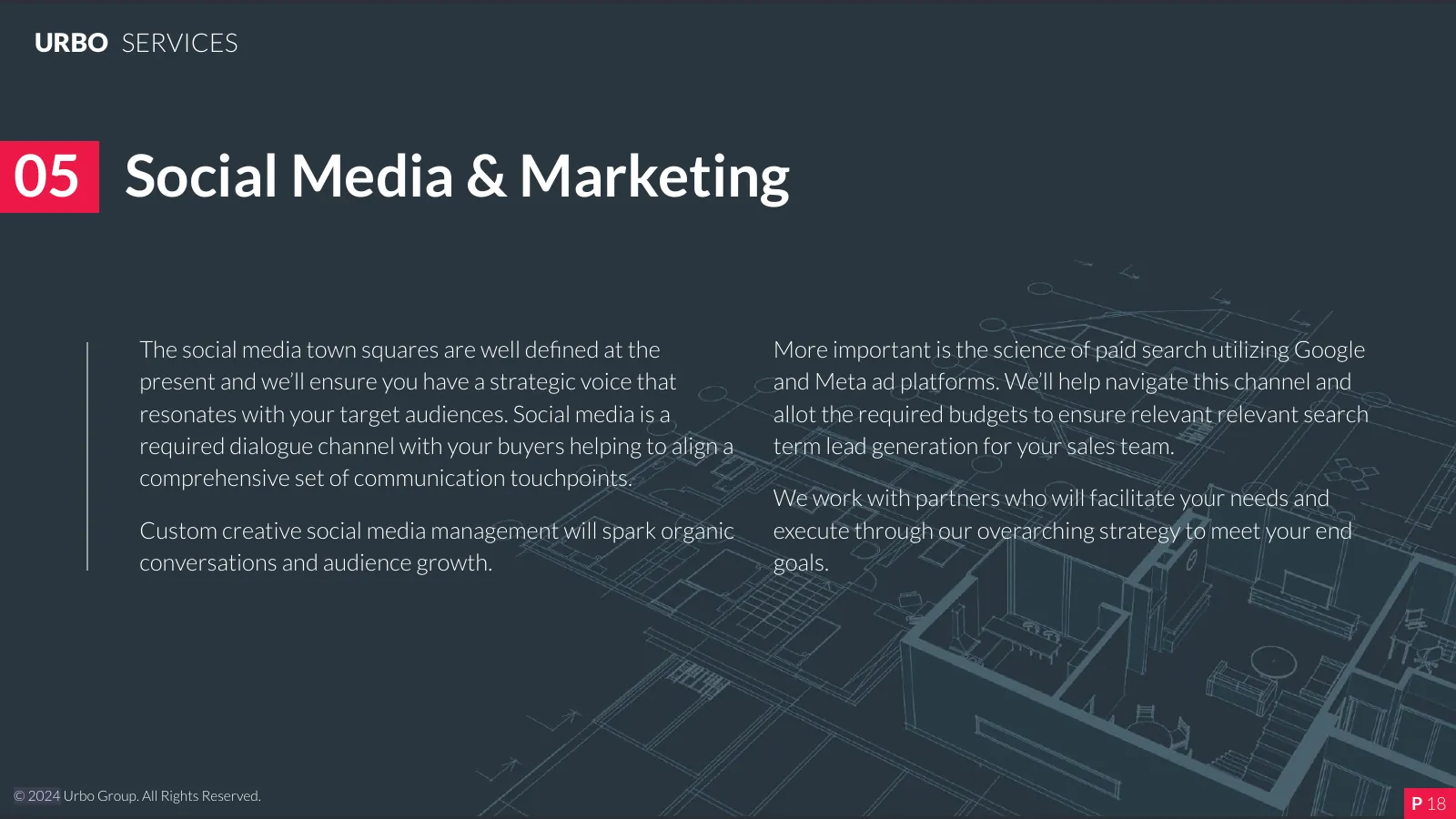
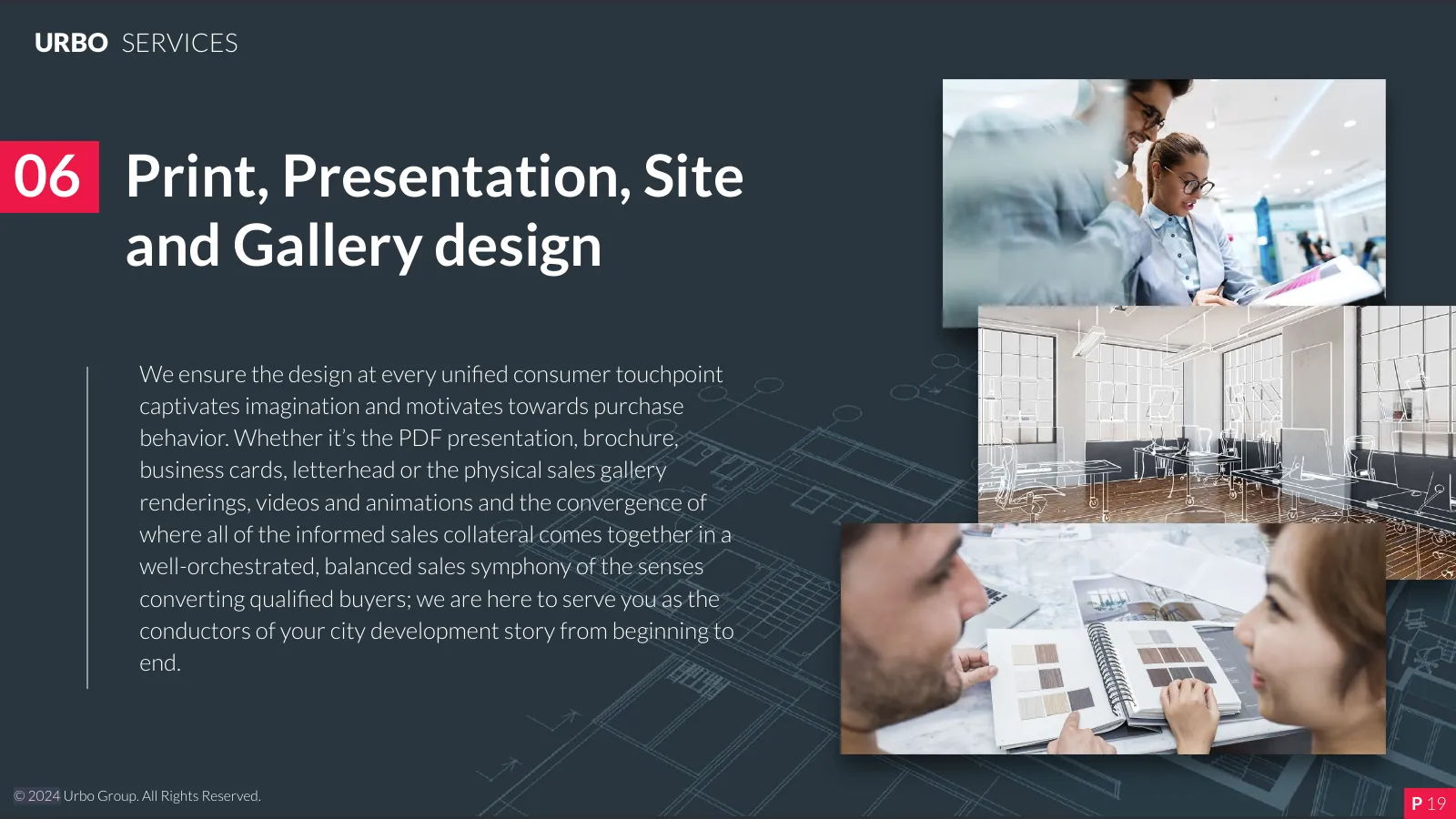
The deck I designed for developer pitches. Swipe, use the arrows or go full screen.
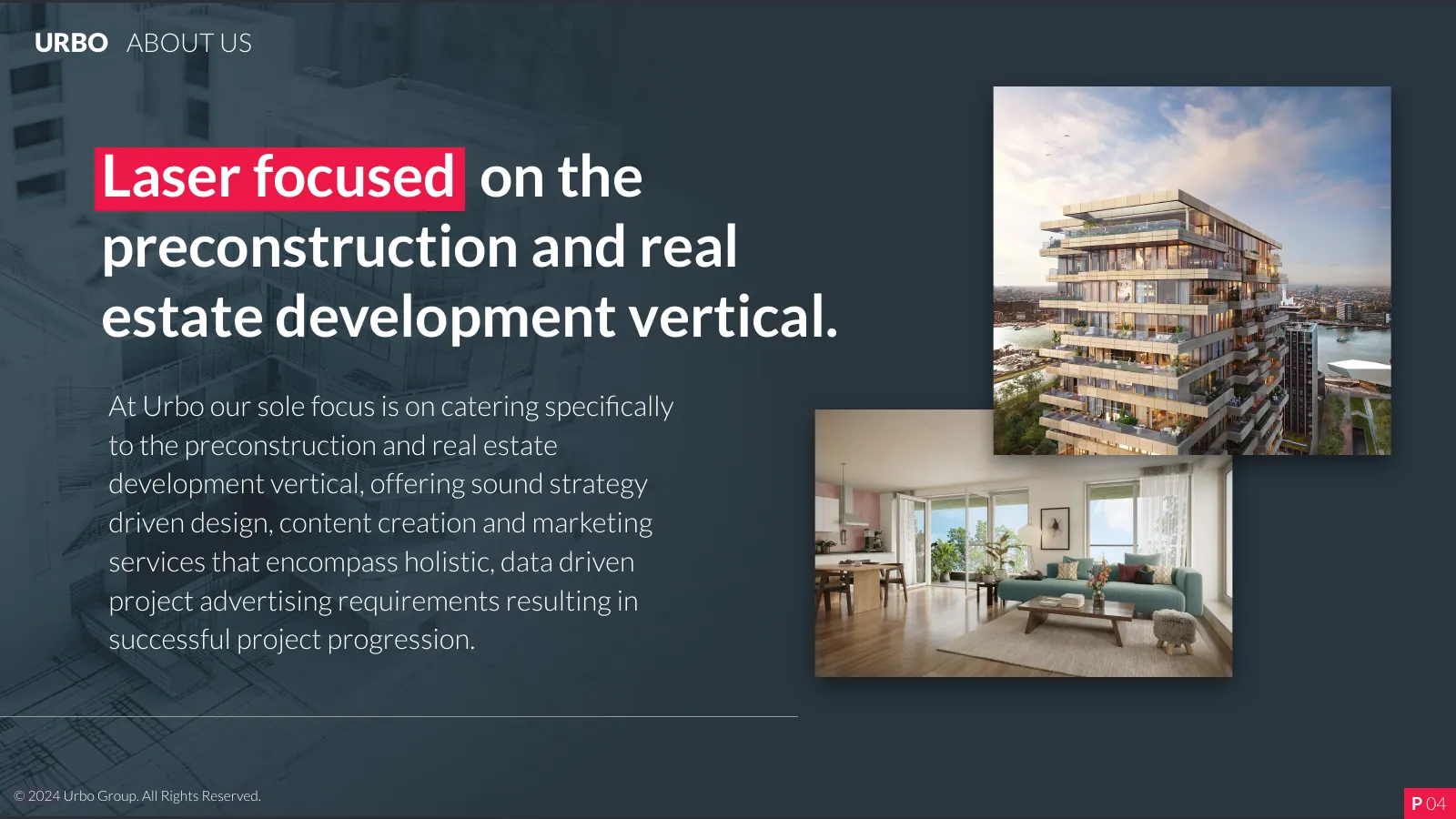
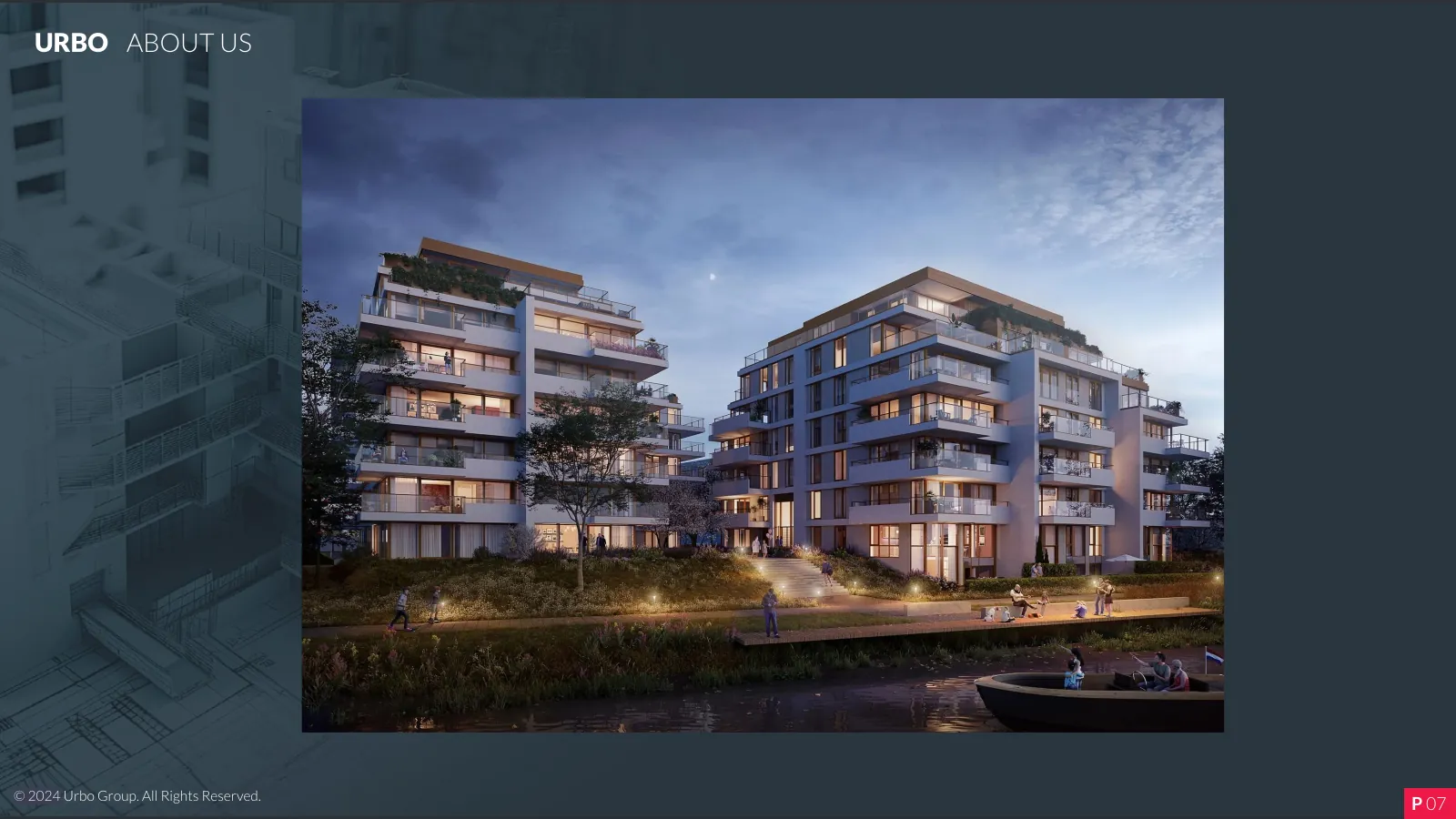
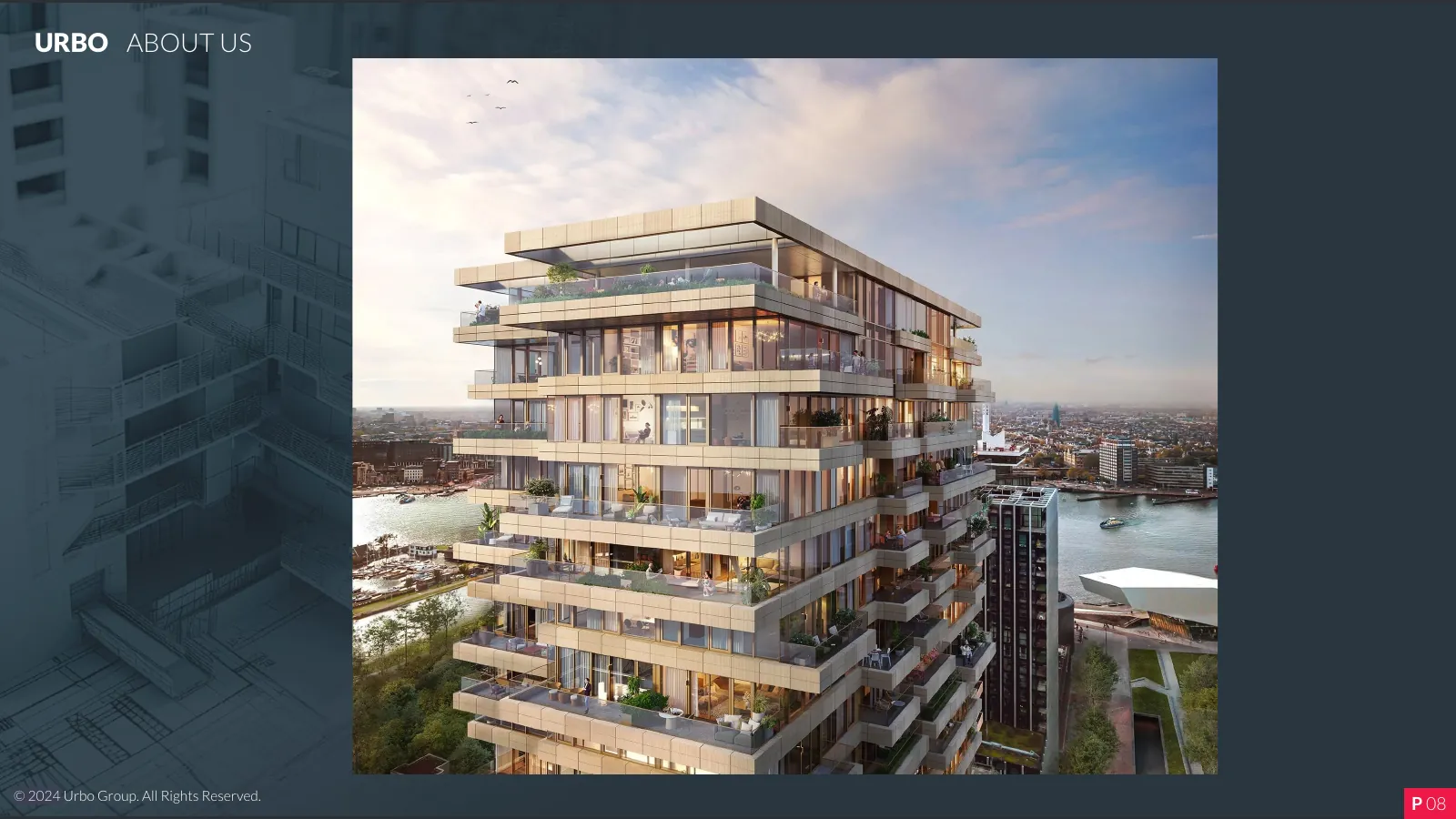
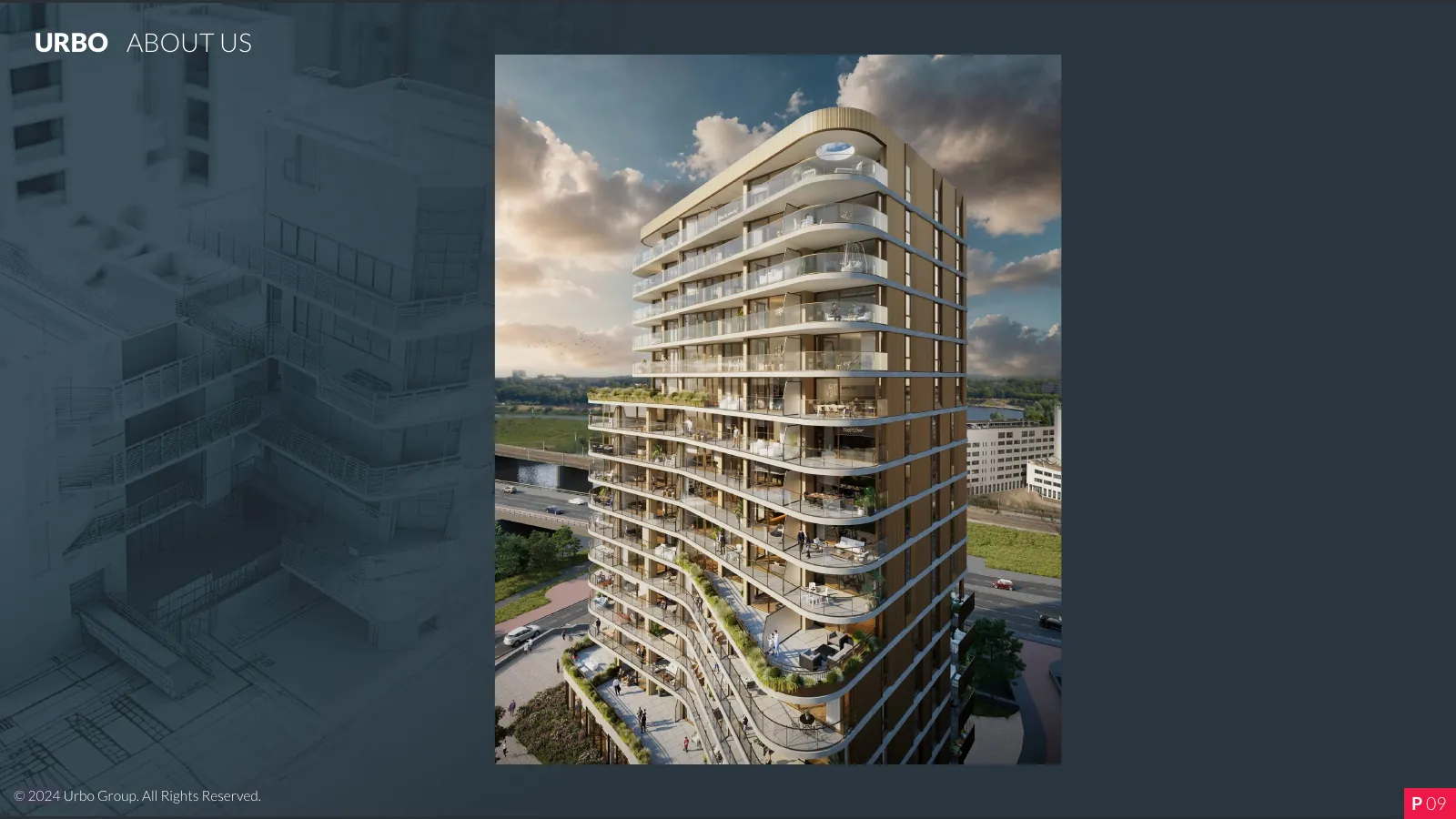
Eight private residences in Old Oakville, starting in the $3 millions. The developer needed a brand and a sales kit before construction: identity, site hoarding, a brochure, a buyer preview, sales documents, direct mail and a website that captured registrations.
Selected pieces. I designed them; architectural renderings are by the project’s render partner. Mockups are labelled.

Hoarding panels along the site, scaled for drivers and walkers.
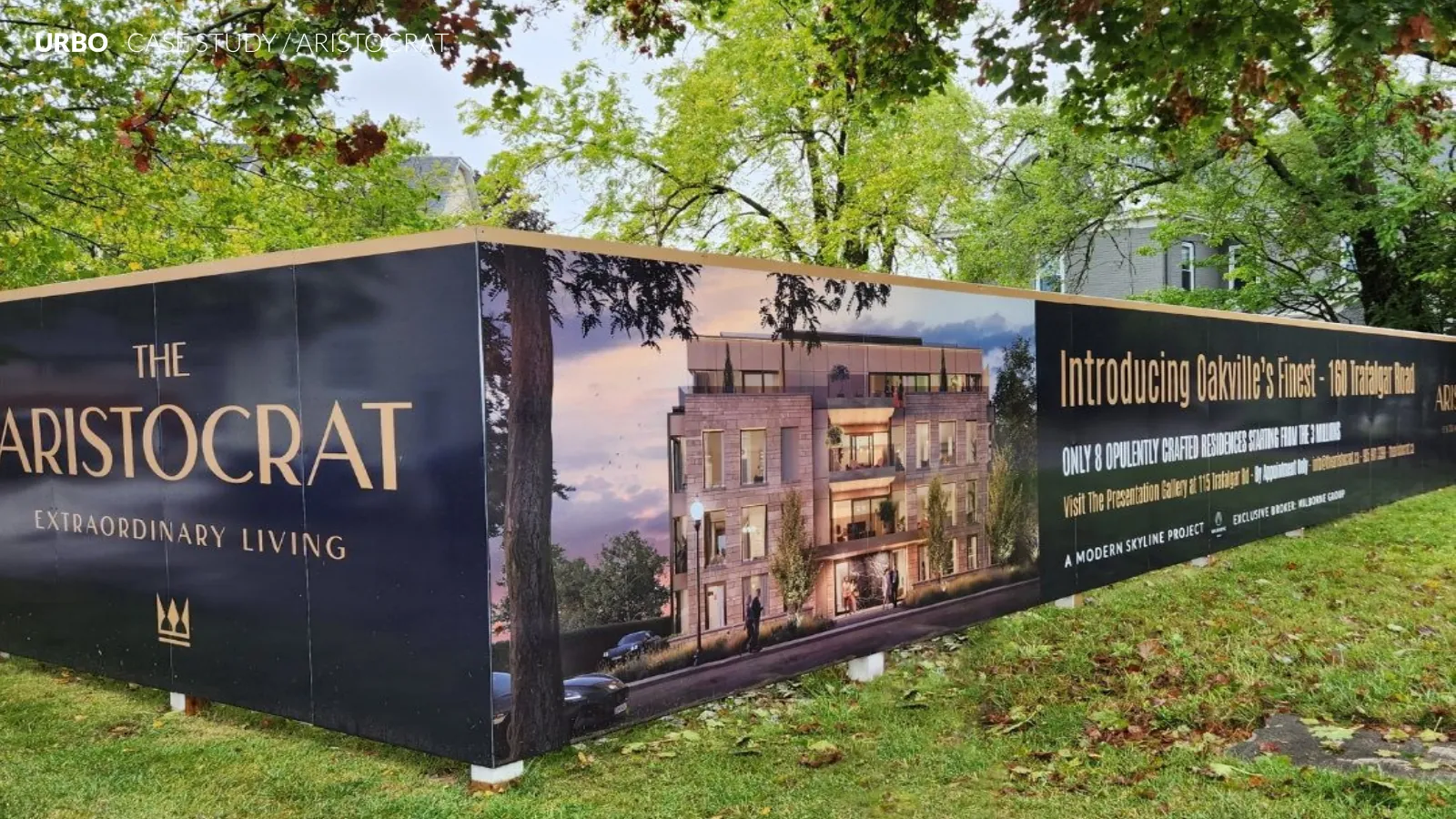 Hoarding in context.
Developer, building, suite count and register call, panel by panel.
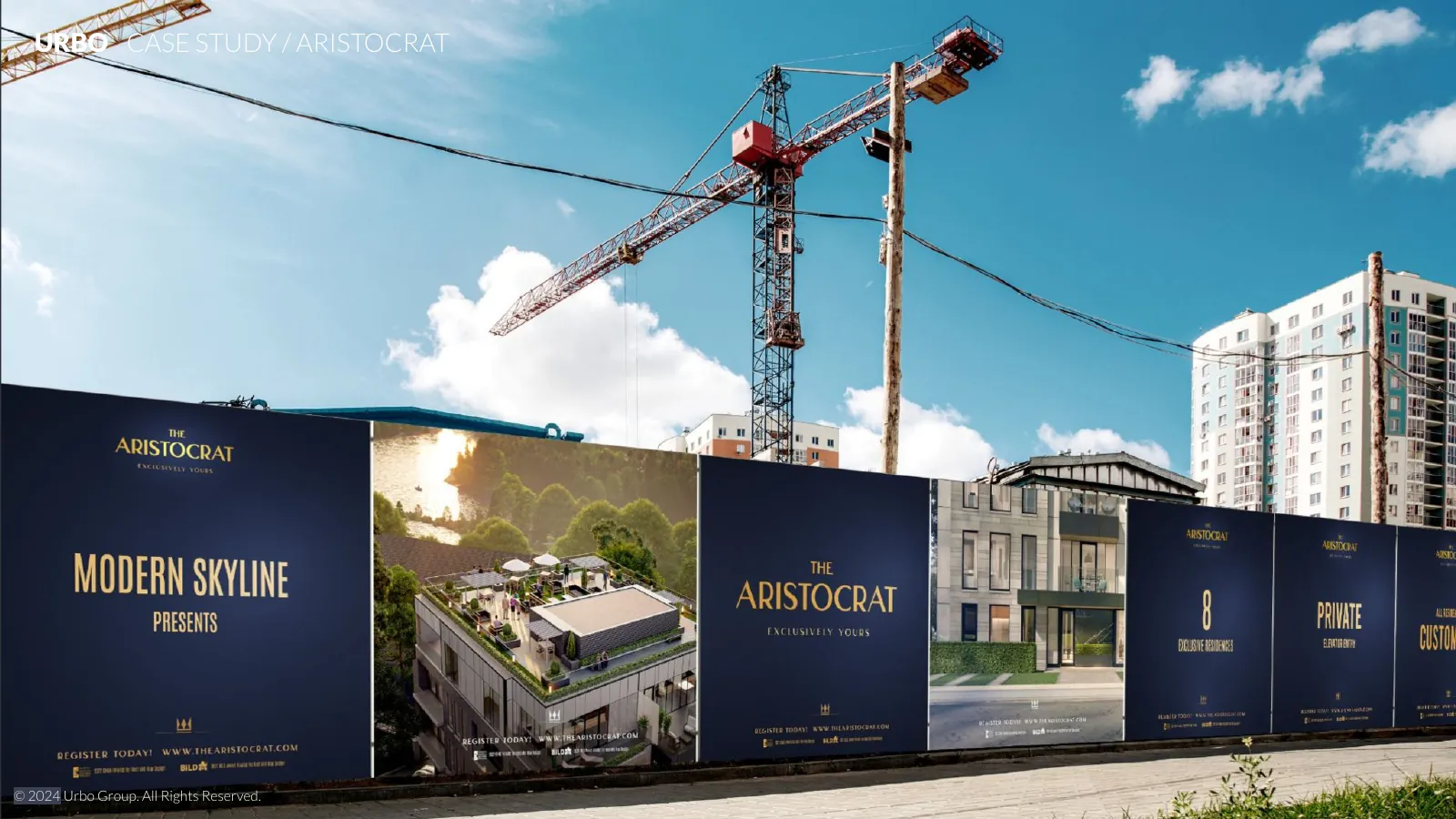 Panel sequence in context.
Old-money restraint for a buyer who wants the address, not the noise: a spaced serif wordmark, a small crown, and dark navy with brass.
Two colours with print and screen values, so every supplier matched.
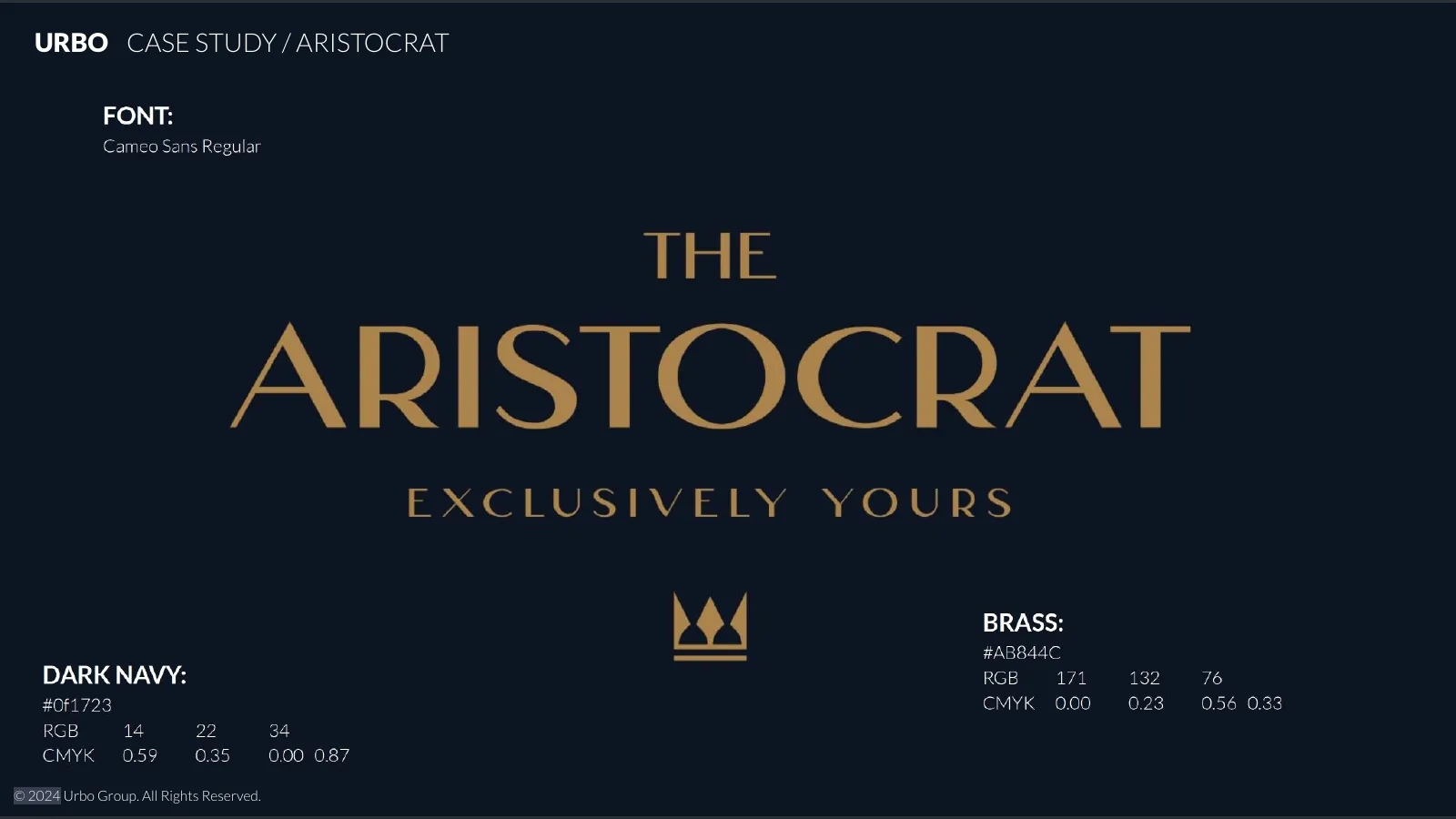 The working lockup. The tagline became “Extraordinary living” at launch.
Navy and brass, with a gold-edged card for the sales team.
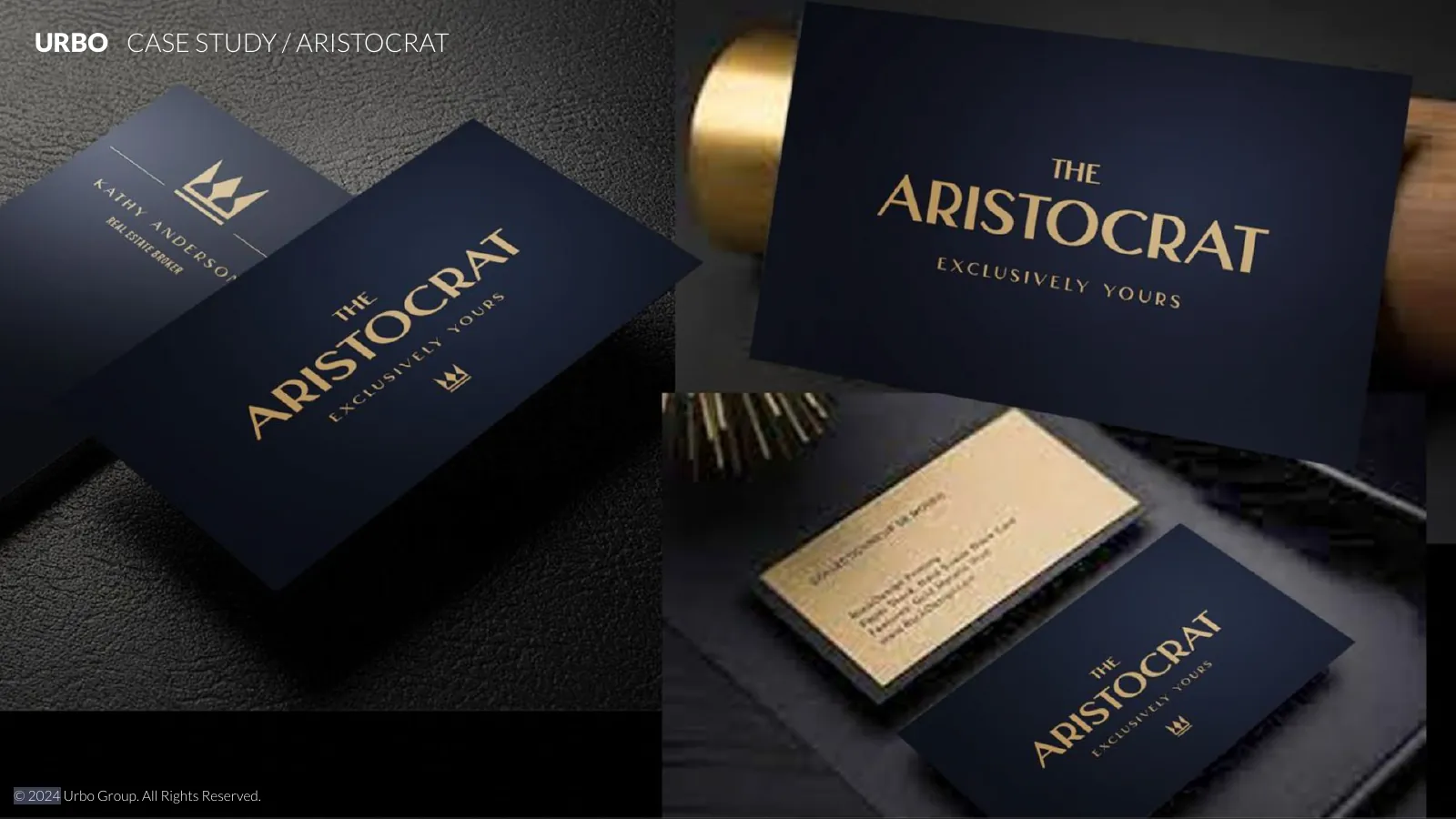 Business card system, shown as a mockup.
Twenty-eight pages, A3, printed for the gallery and revised as a digital edition for the broker launch. Flip through it.




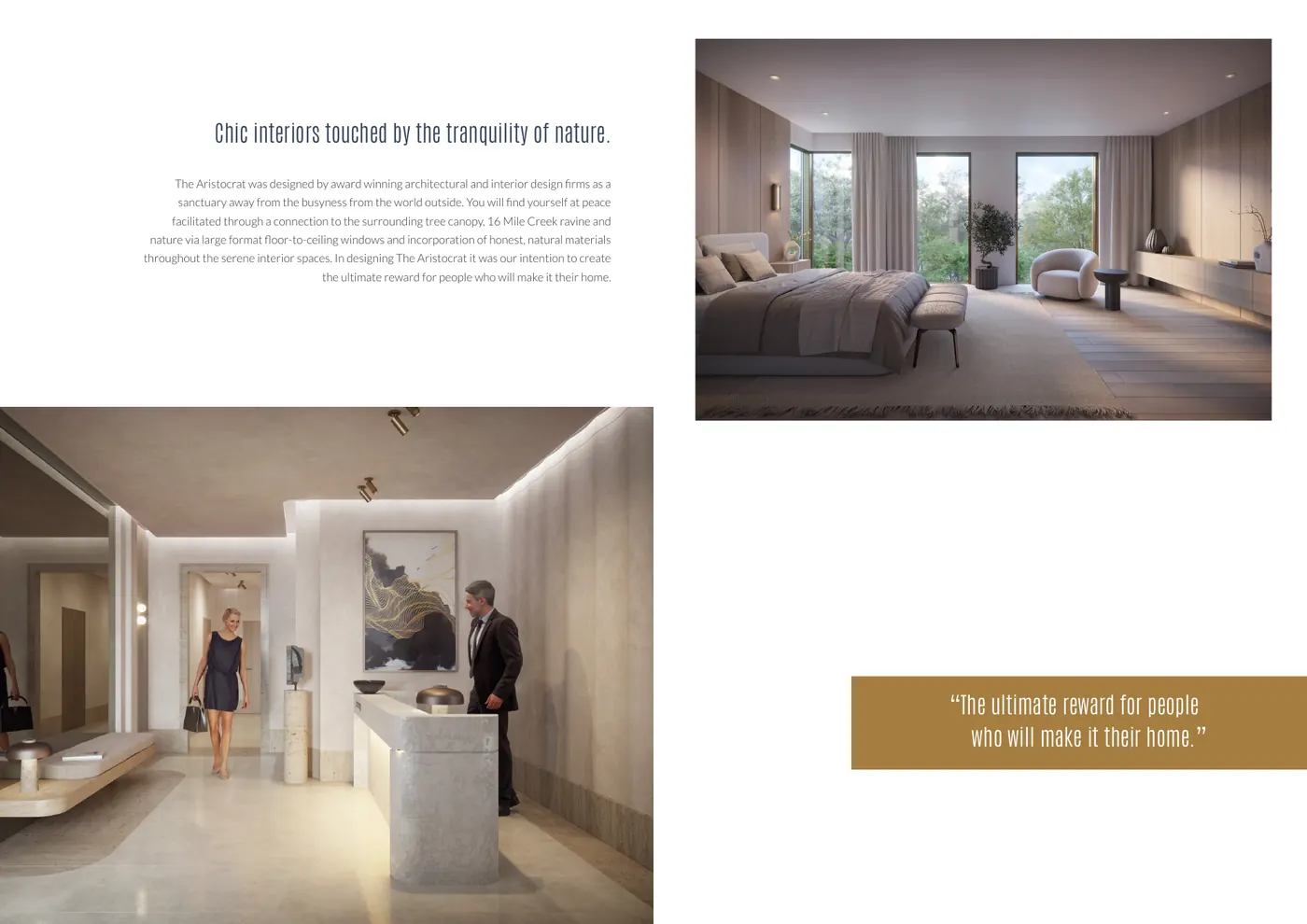
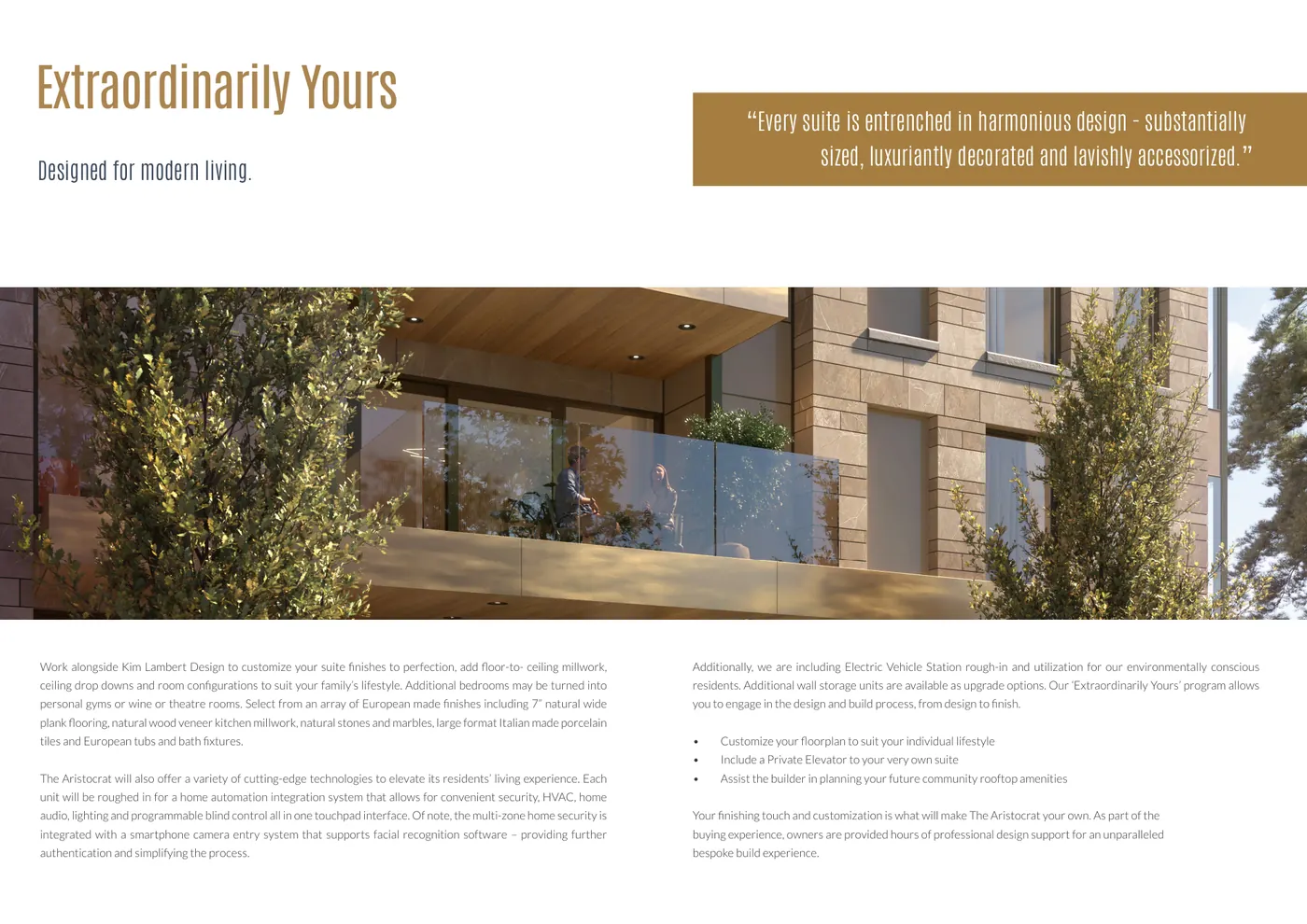
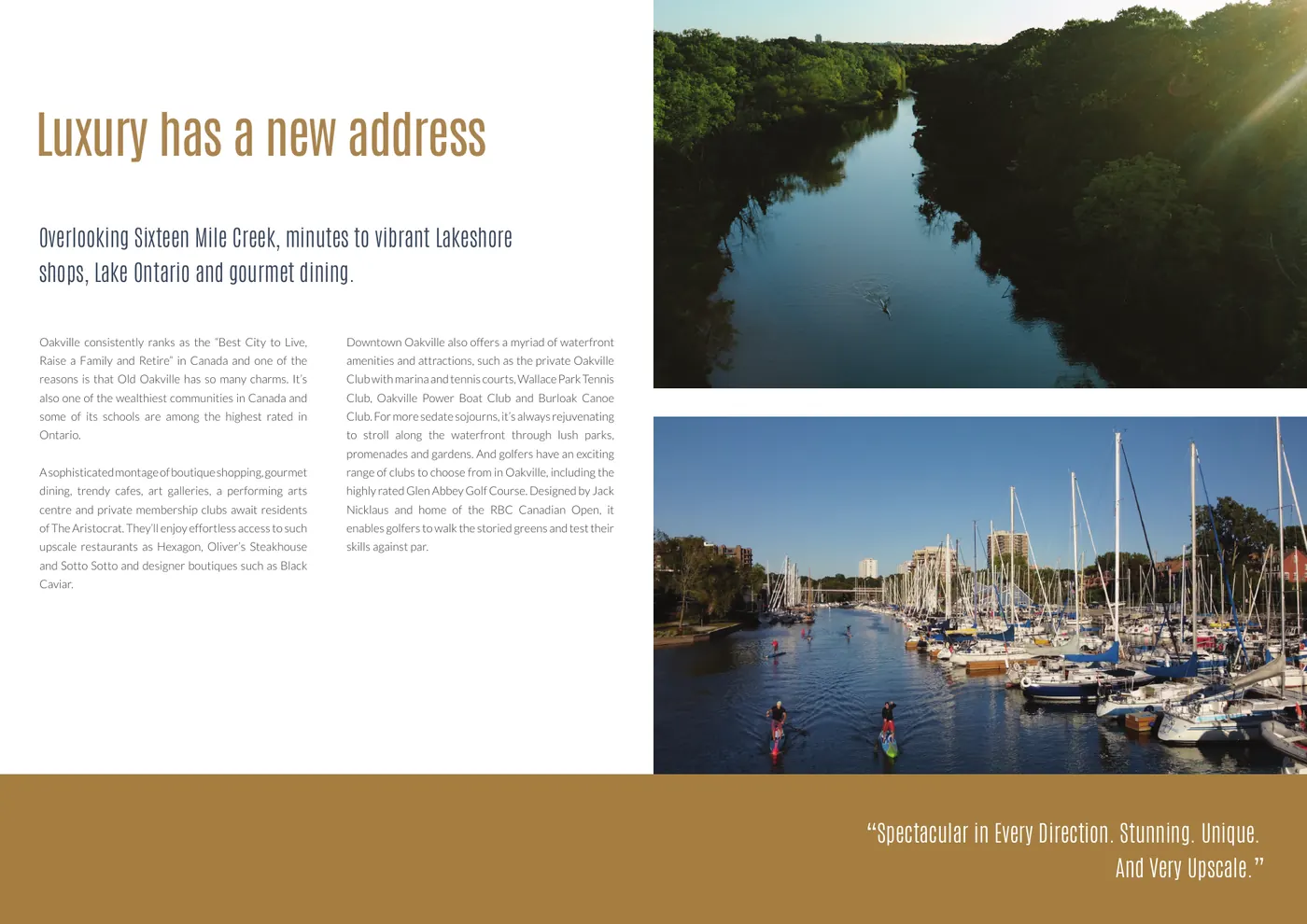

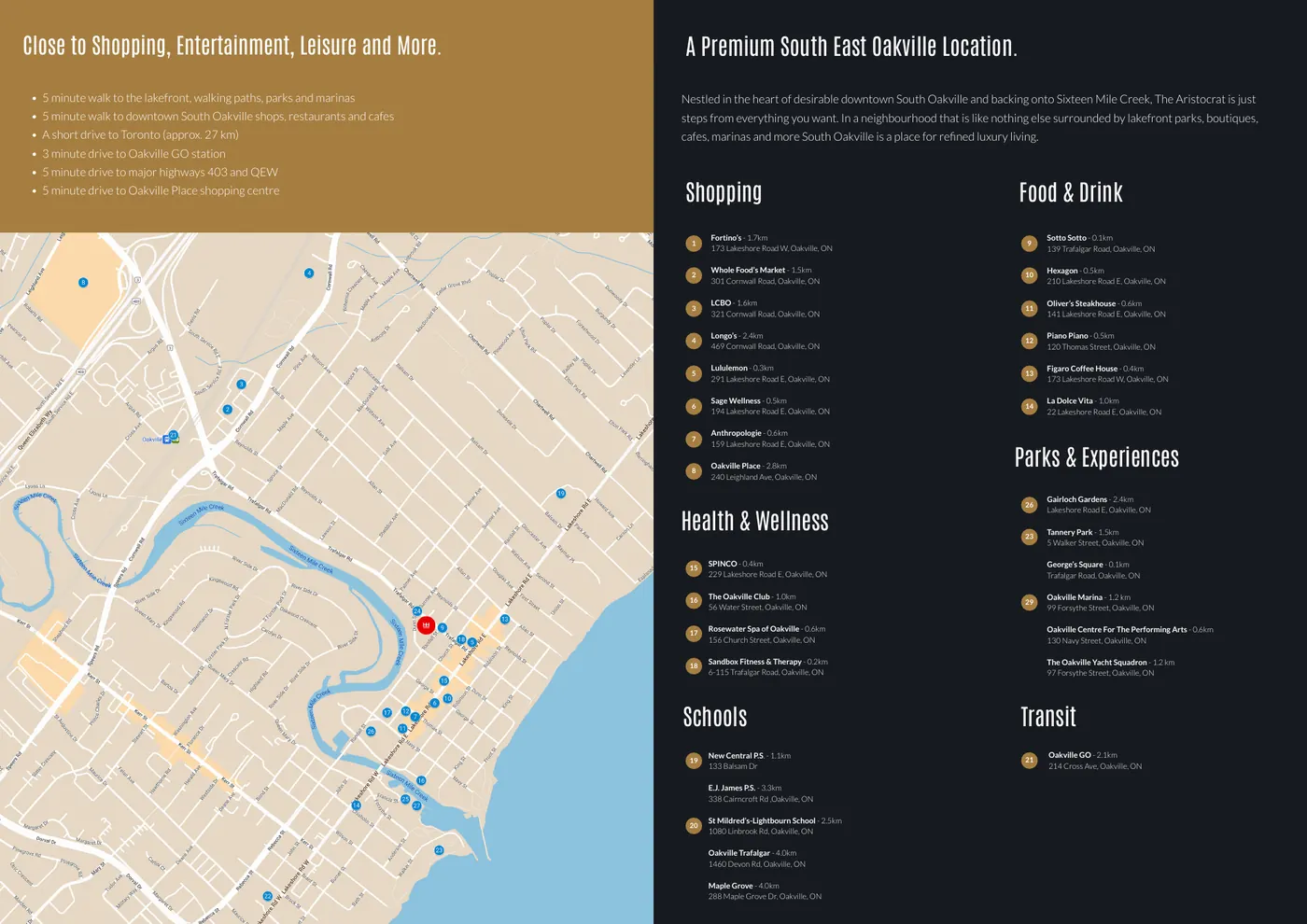

An invitation-only focus group: prospective buyers weighed in on design and finishes before the suite plans were final.
Front: scarcity and a date. Back: the invitation.
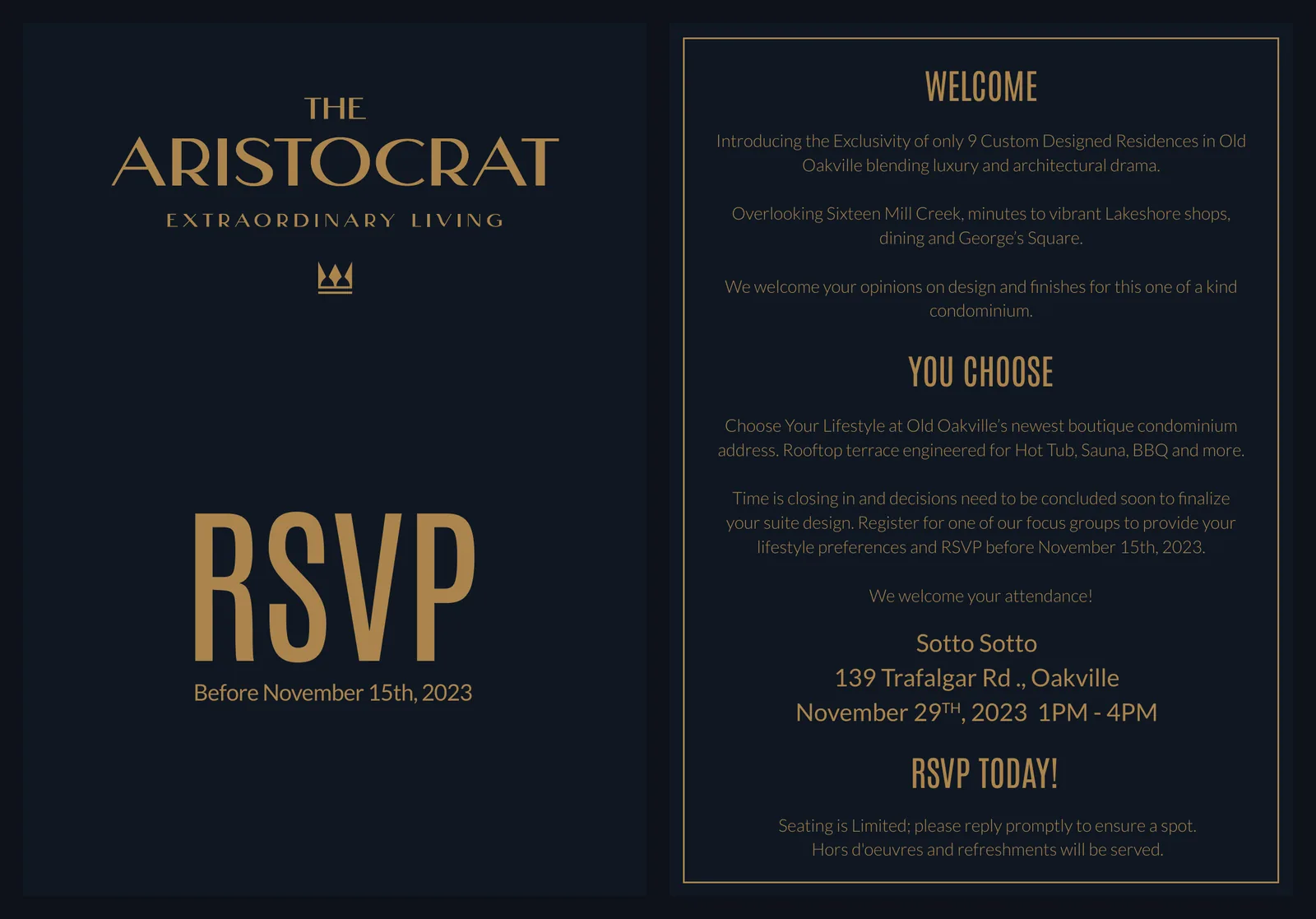 RSVP card, autumn 2023.
Four by four feet: “Lavishly crafted residences, now open, by appointment only.”
 48 × 48 in sign.
The pieces brokers hand to buyers, and the mailer that brought new buyers in.
Every spec a buyer or broker asks about, on one page.
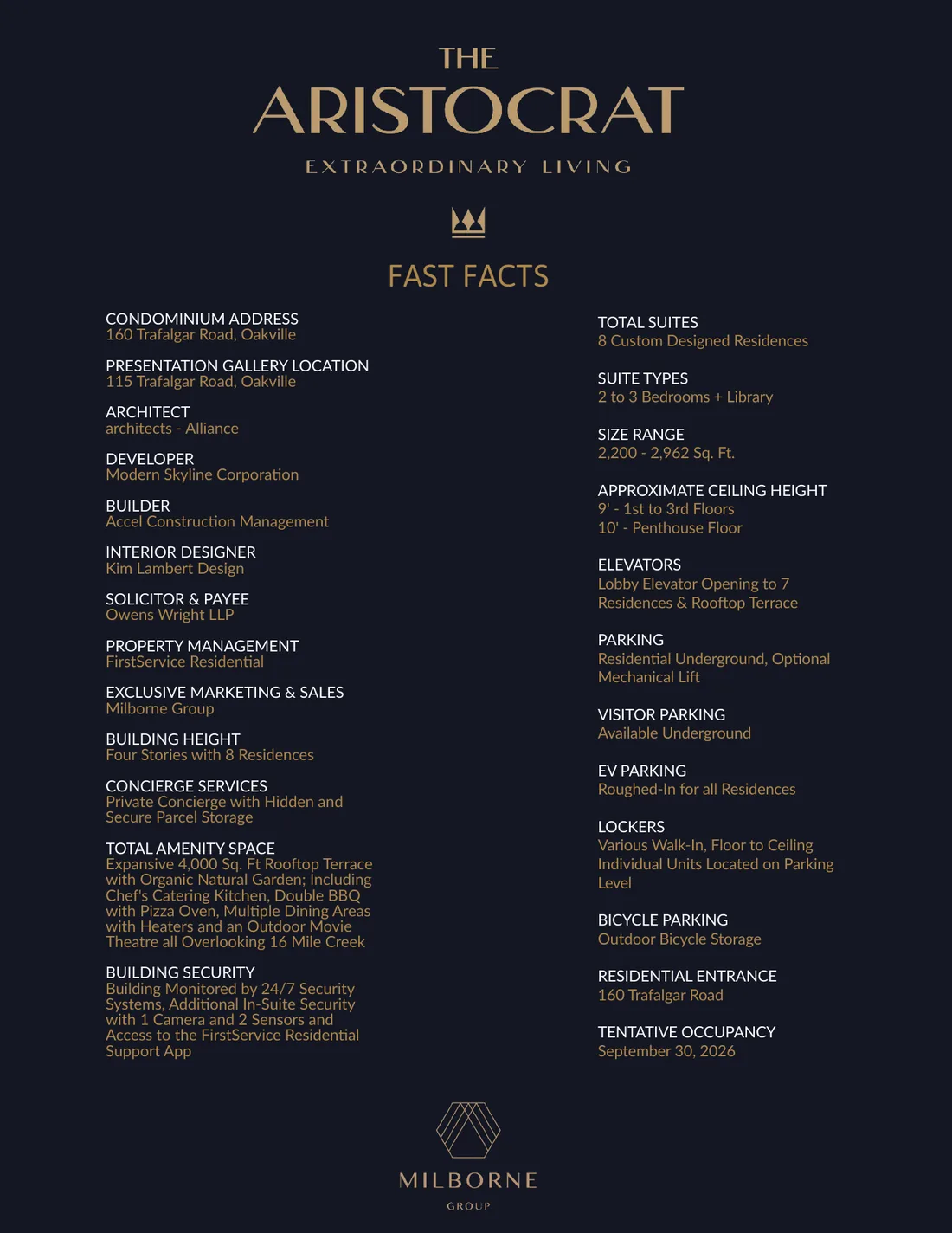 Fast facts, final version, July 2024.
An oversized solo card for a direct-mail drop.
 Solo mailer, side one, October 2024.
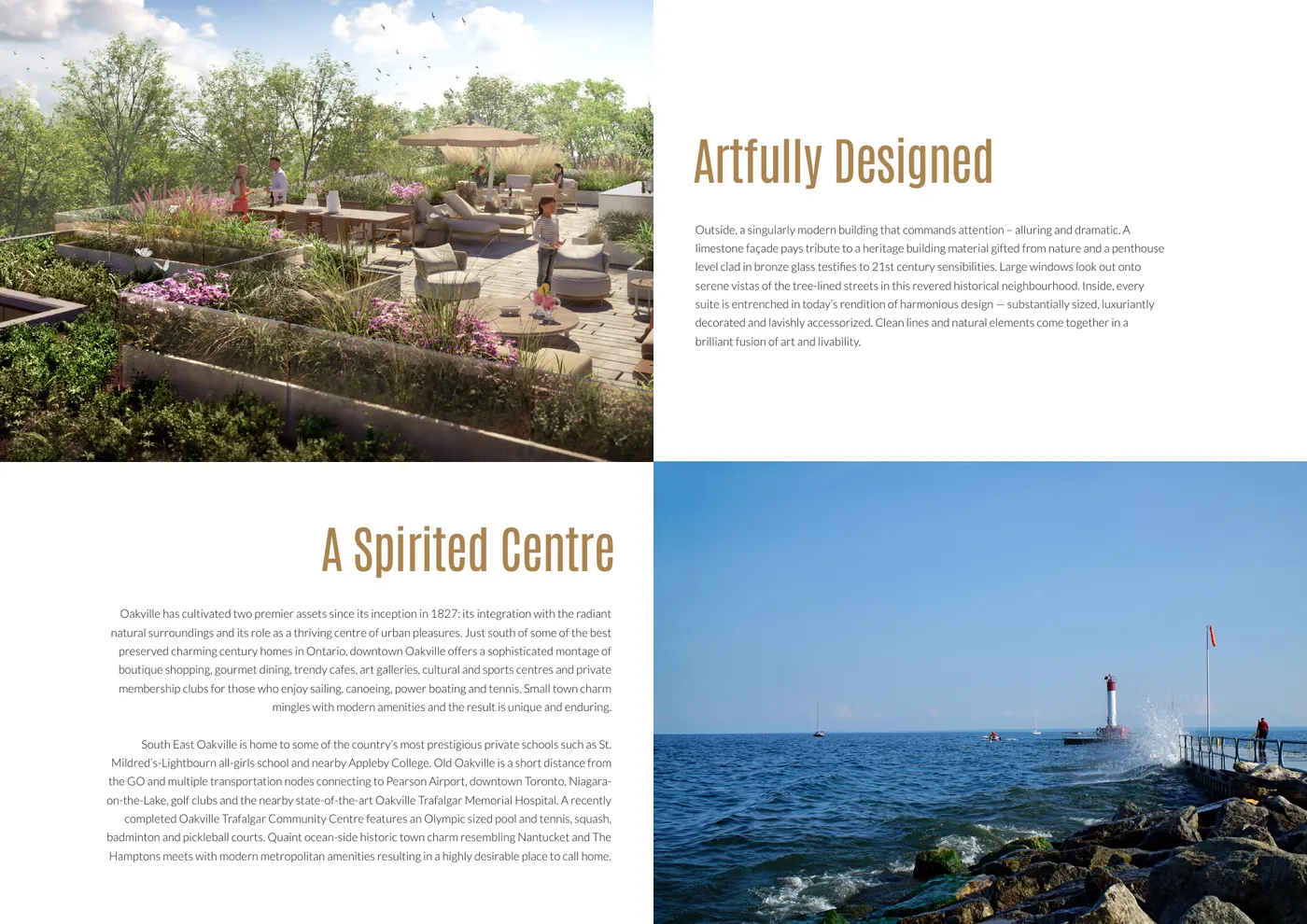
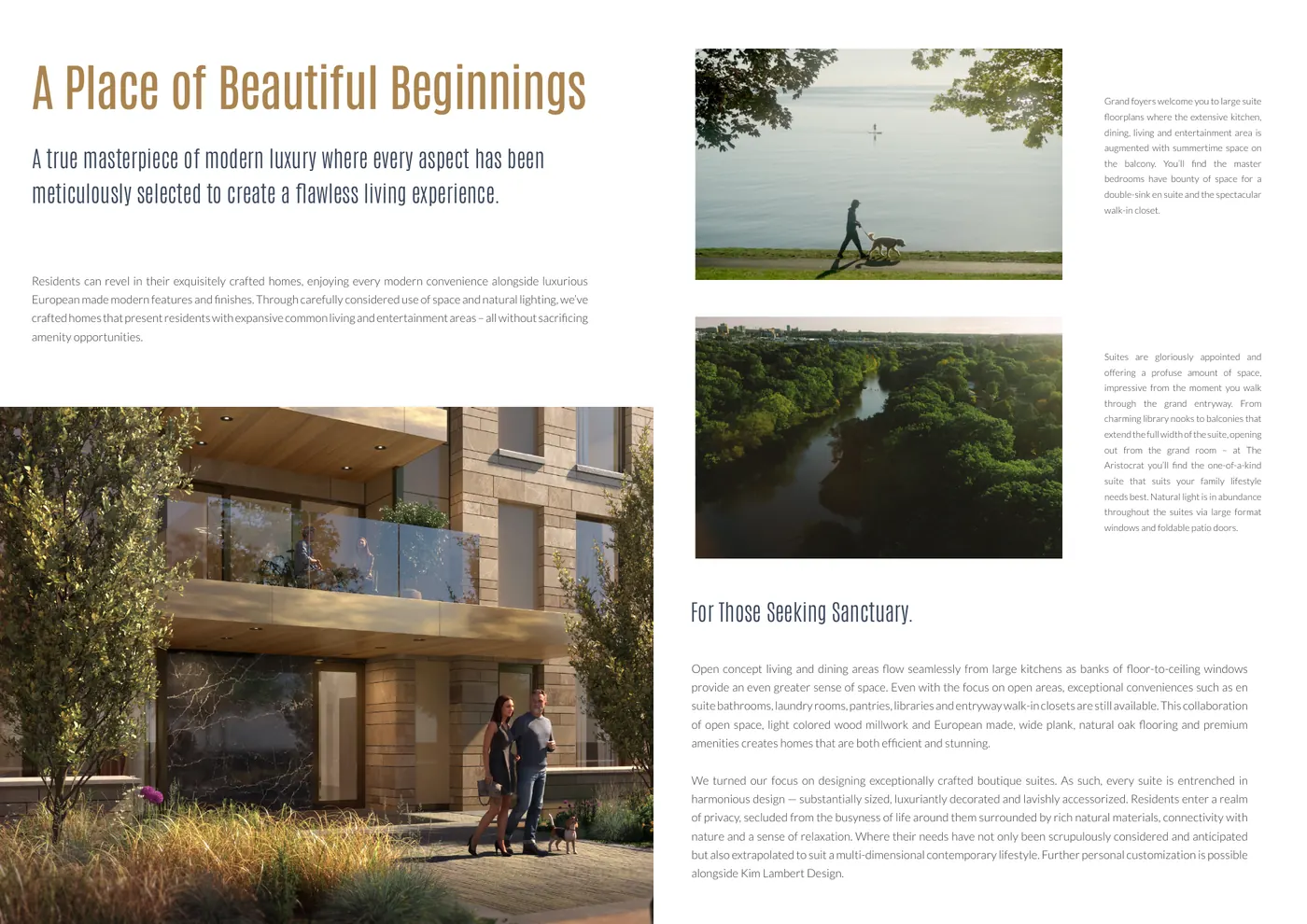
The registration site: the building, the neighbourhood, the residences and one clear action, register.
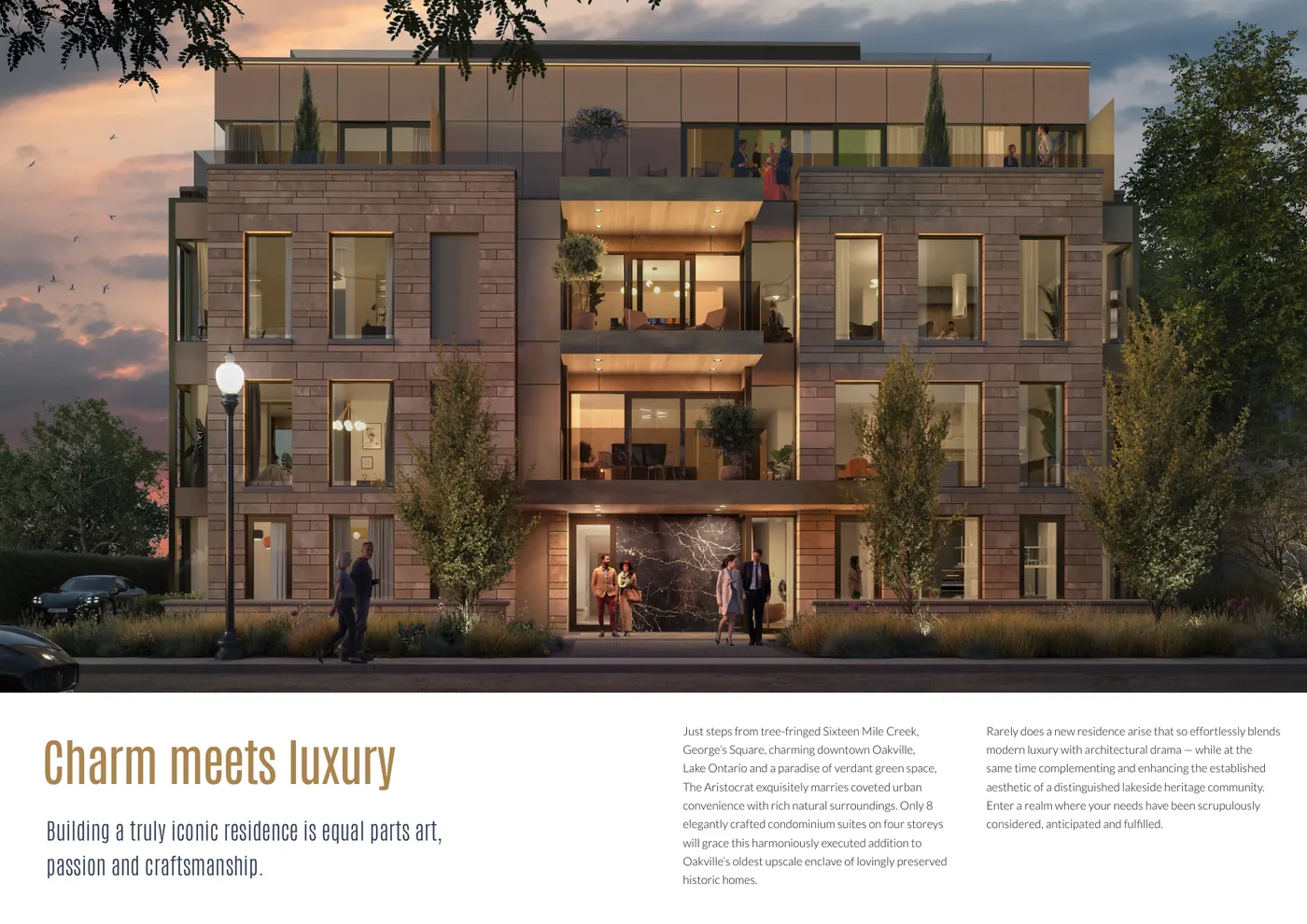
The building at dusk, then straight into the story.
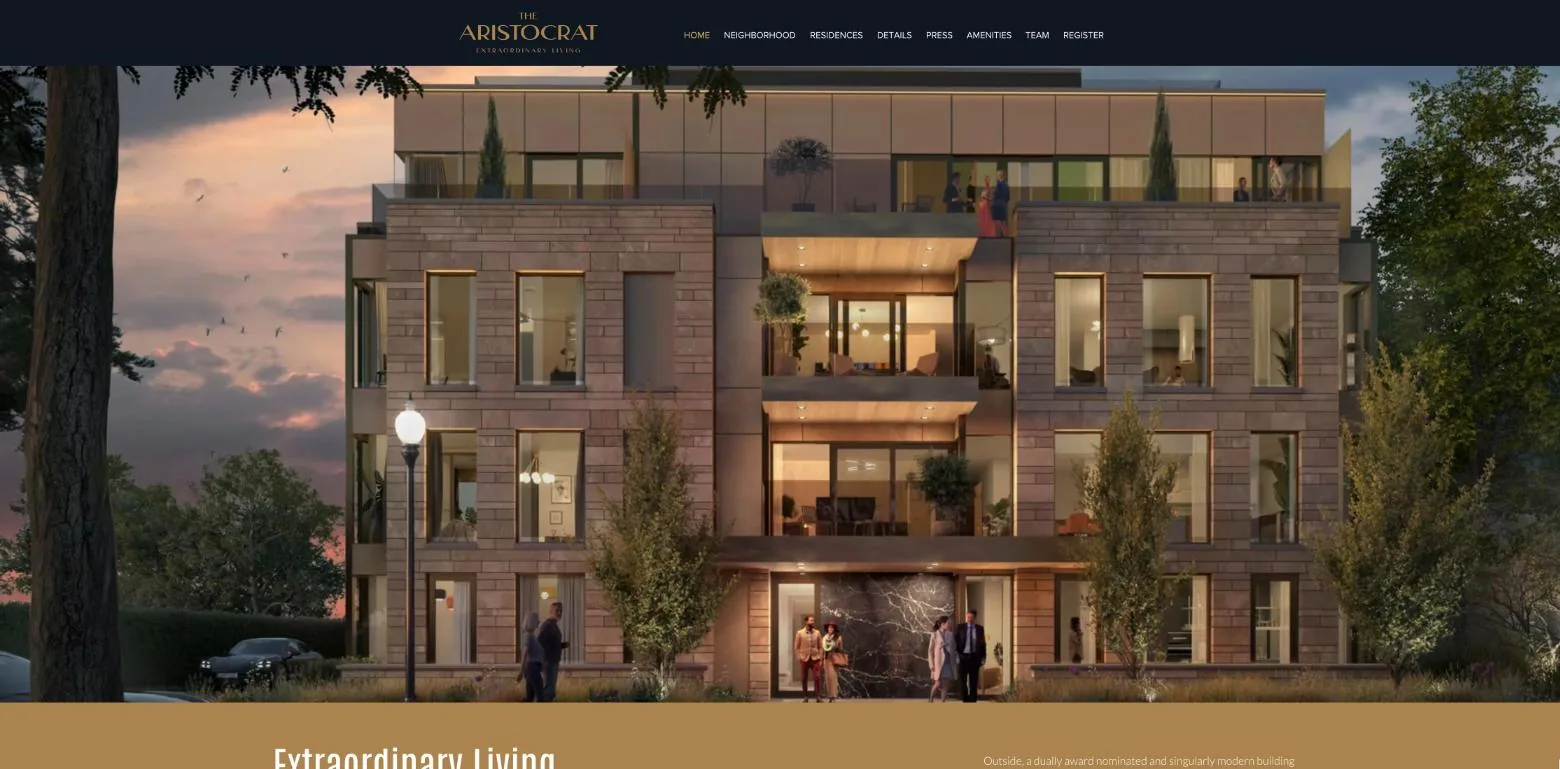 thearistocrat.ca, home page as it runs today.
One layout system from laptop to phone, with the full page shown.
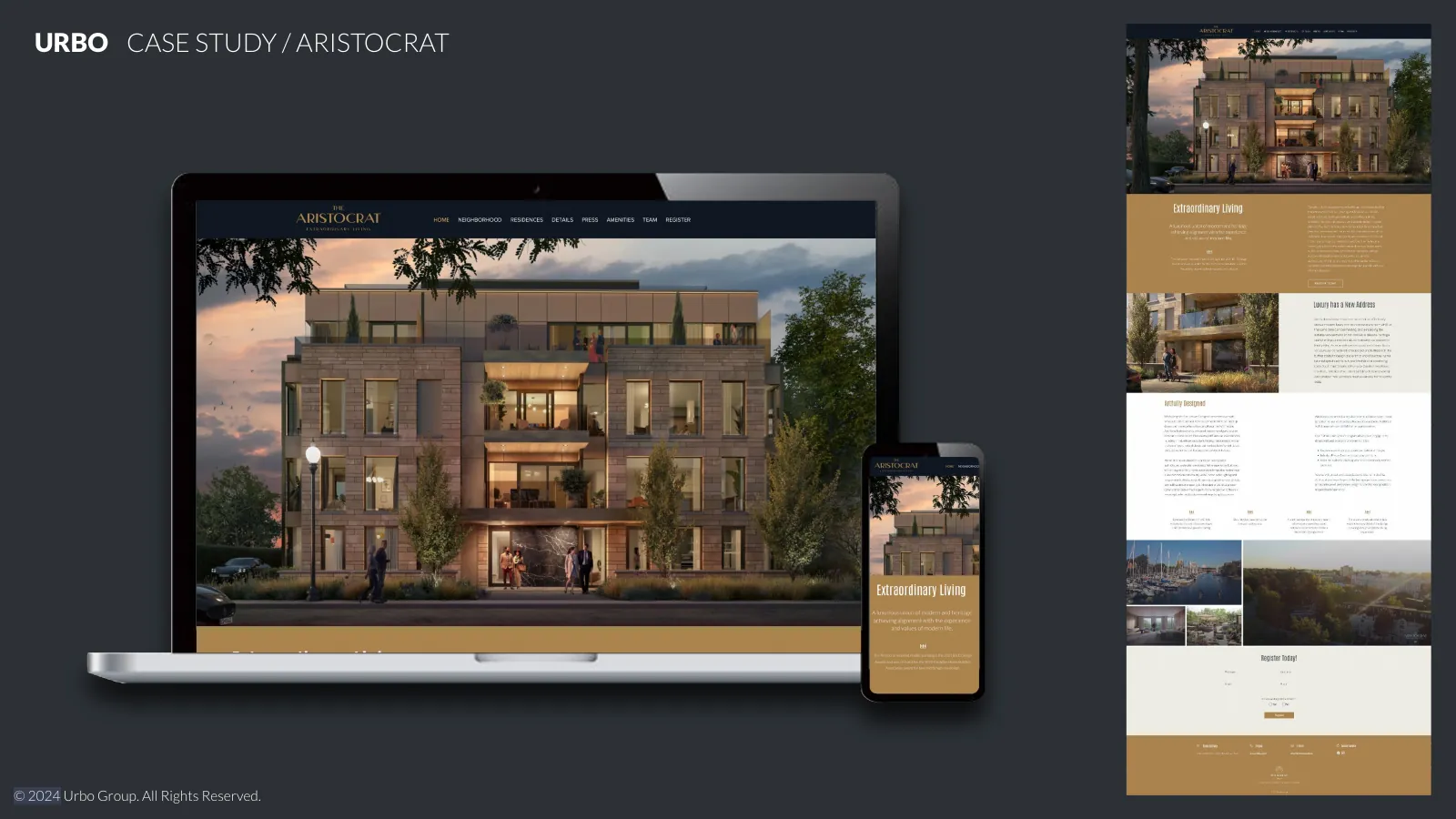 Responsive layouts, from the Urbo case deck.
The RSVP above says nine. The final fast facts say eight. An early brief said ten. Each was right when it was printed. That is how preconstruction works, and it is the problem the concept below is built around.
In late 2024 Matt proposed something bigger than an agency. Preconstruction sales were fragmented and slow, and everything bottlenecked at sales. The answer, as we pitched it, was one platform for developers, buyers, brokers and the service providers around them.
My role was to turn that architecture into a product people could use. The platform was not built past an early prototype, and no seed round was raised.
Developer, buyer and broker portals; a marketplace for renders, photography and copy; AI microsites; immersive tours; online deposits.
The plan needed funding to reach a first paying user. Every portal depended on the others to be useful.
Of everything in the plan, a buyer asking about a building and getting a trustworthy answer was the piece the agency already had the inputs for.
Matt closed Urbo in 2026 after more than a thousand outreach emails. The first two points are his read. The last two are mine.
Our offer was production: renders, copy, layouts, campaigns. In the same two years, AI began automating much of that work.
Lesson: sell the system that produces the work, not the hours.
Most US developers build first and sell after. Presales marketing is concentrated in a few cities, and the large agencies already serve them.
Lesson: check how the target market actually buys before you plan for it.
Four portals, a marketplace and payments, before one paying use. It needed capital to prove anything.
Lesson: start with one surface that earns its place on its own.
We knew how a launch runs: the documents, the revisions, the questions buyers and brokers ask. None of that was in the product.
Lesson: build from what you already know better than anyone.
A concierge on the project website that answers buyers only from the developer’s approved documents, shows its source, hands price questions to a person, and stops when two documents disagree. The sales team’s side is shown alongside.
Ask one of the suggested questions or type your own. The Wren and Ashgrove Developments are invented; every document and number is fictional.
Each state has a rule the interface keeps, for the buyer and for the sales team.
The documents and their versions are listed before the first question, with what it will not answer.
Every answer names the document and version, and can show the exact line.
Price, availability and incentives go to the sales team, with the conversation if the buyer agrees.
Answer the part the documents cover, say what they don’t, and send the rest to the team.
When two approved documents disagree, the concierge pauses that answer and tells the team which lines conflict.
The team picks the current source with a reason. The old version is retired and buyers who asked are updated.
Each one gives up a smoother demo for something a developer’s sales team can stand behind.
The concierge answers from the launch documents the team has approved, never from general knowledge.
Why: specs change during sales. An answer without a version can’t be checked, and a wrong spec quoted to a buyer becomes a dispute.
It never quotes them. It passes the question on, with the buyer’s consent to share the conversation.
Why: they change daily and they’re negotiated. That’s where an agent earns their fee, and with context they don’t start from zero.
When two documents disagree, it doesn’t pick one. It tells the buyer the answer is being checked.
Why: picking either is a coin toss. The conflict itself is news the team needs: an out-of-date brochure is still in circulation.
A question the documents don’t cover goes to the team once, and their answer joins an approved FAQ.
Why: the FAQ grows from real buyer questions, and the team answers each one a single time.
What I chose, what I didn’t, and why.
The platform plan had four portals. I picked the one surface that sits on the project website, which the agency already built as part of a launch, so it could be sold with the launch.
Considered letting the model answer neighbourhood and market questions from general knowledge. Rejected: claims about schools, values or investment returns are exactly what a developer can’t stand behind.
A document name proves little. The exact line, one tap away, lets a buyer or broker check it in seconds.
Sharing the conversation with sales is the buyer’s choice. Checked by default would get more context and less trust.
The concierge is only as good as the team behind it. Showing both sides makes the operating model part of the design.
Plain HTML, CSS and JavaScript. No framework, no back end, no model calls: the answers are scripted so every state can be shown on demand. The source is public on GitHub under an MIT license.
I defined the states, the rules and the two-sided model, and directed the build. An AI coding assistant (Claude) wrote most of the code to that spec.
The Wren, Ashgrove Developments, the documents and every number are fictional. The real launch work is shown above, separately.
Not yet tested. Next: run it on one launch’s documents and measure how many questions it answers, how many handoffs arrive with context, and how many conflicts it finds.
The pricing assistant applies these rules for analysts inside a data product. This one applies them for buyers on a brand site: answer from sources, show them, and say when you don’t know.