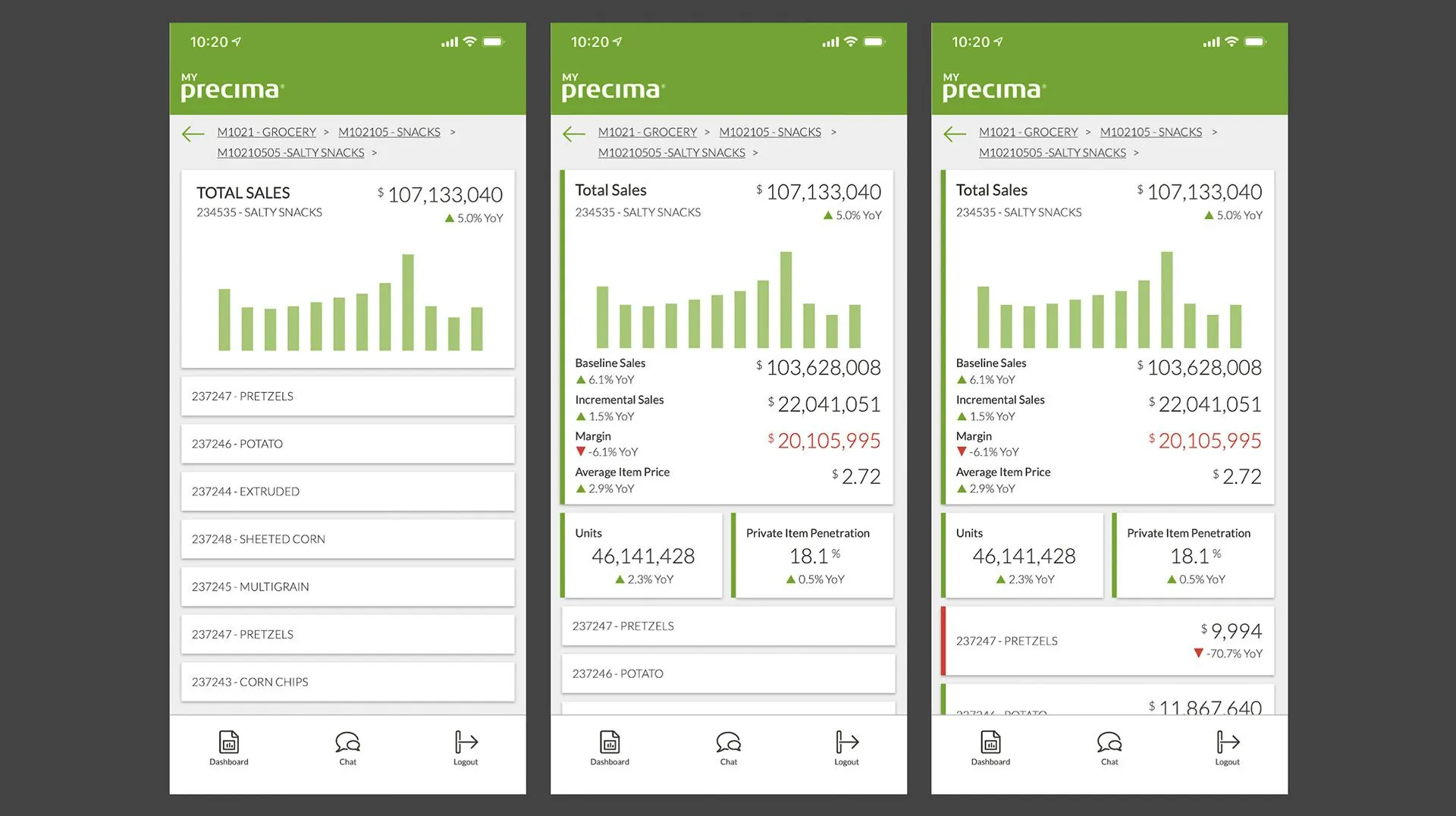
1Organize around decisions, not reports
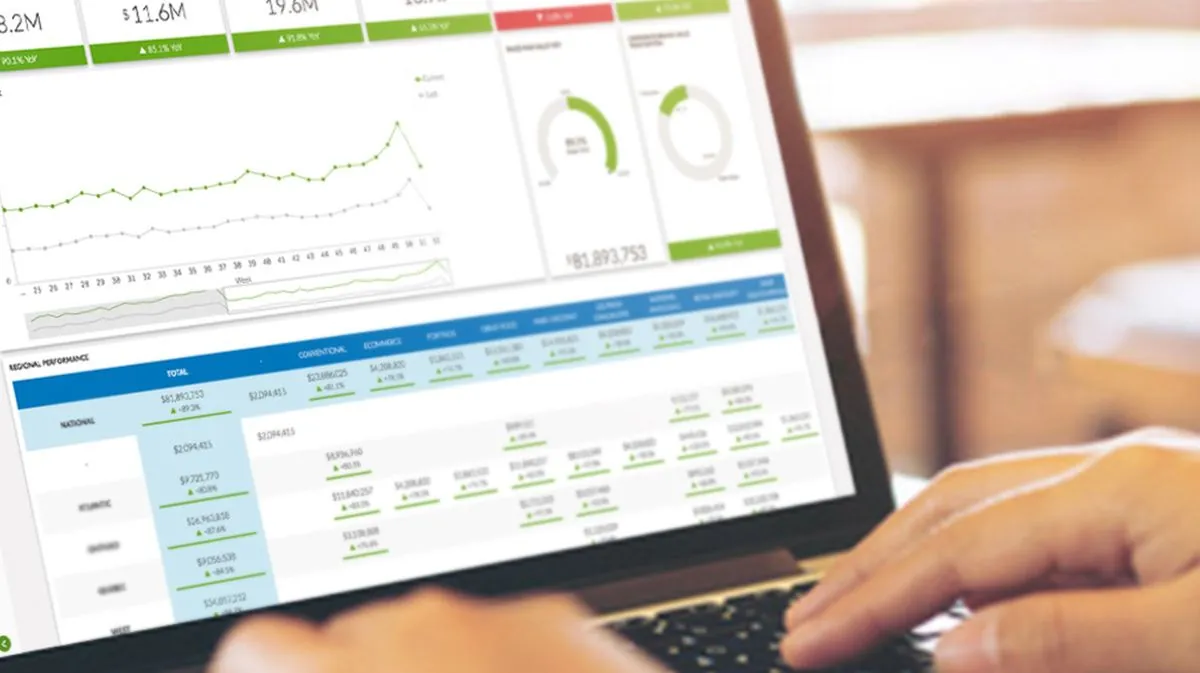
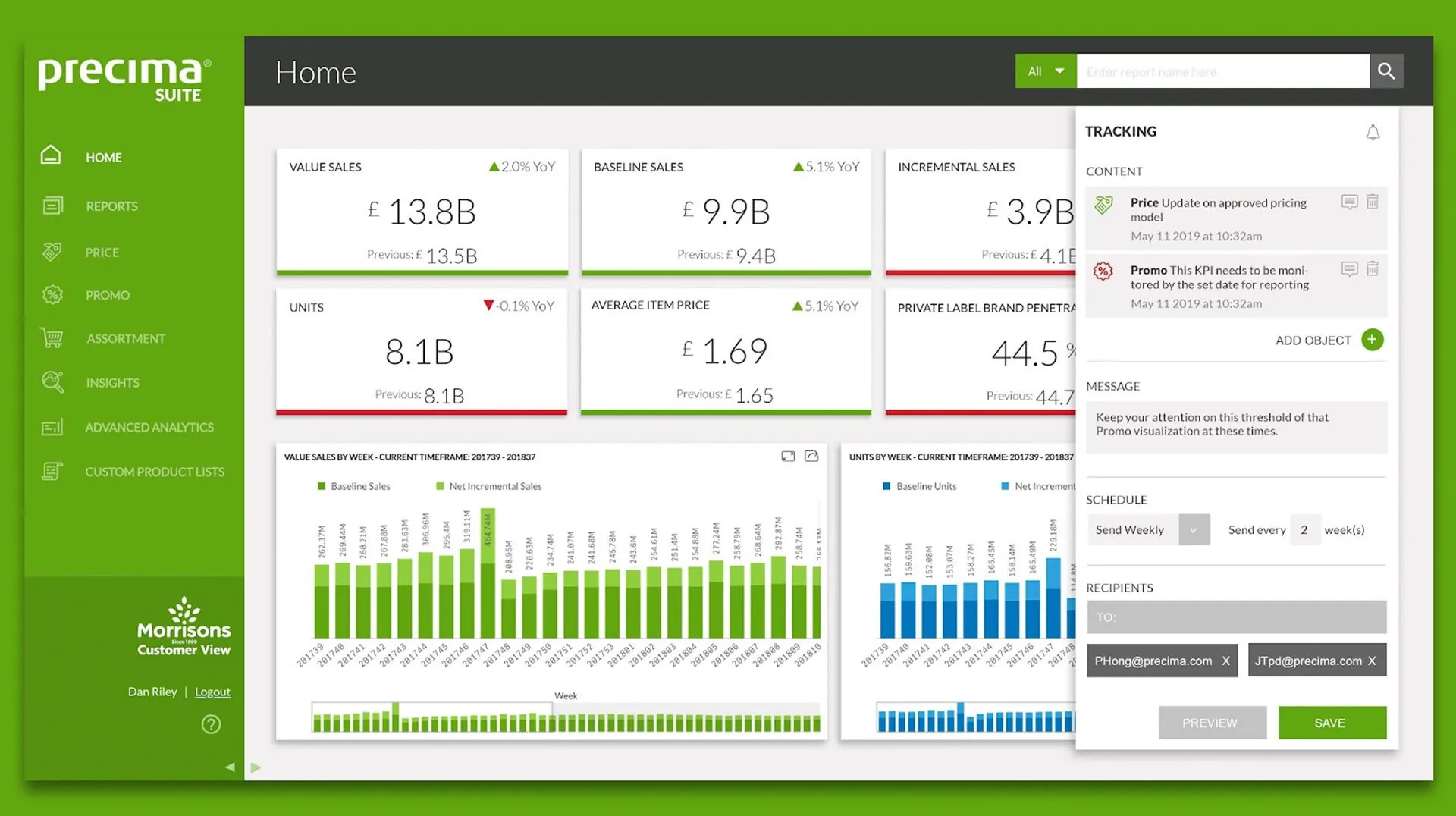
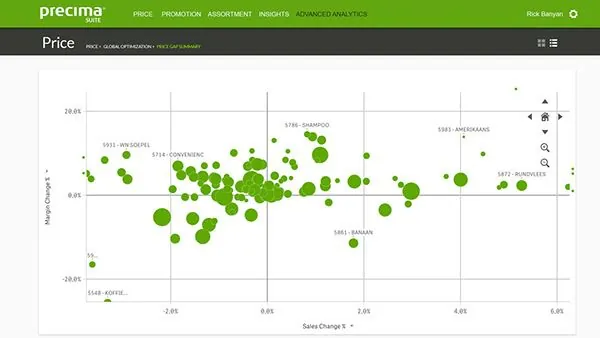
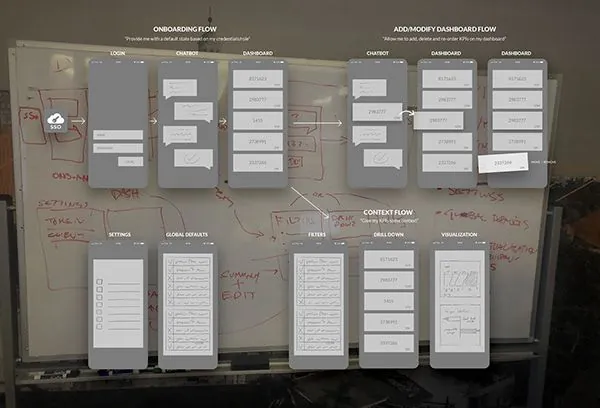
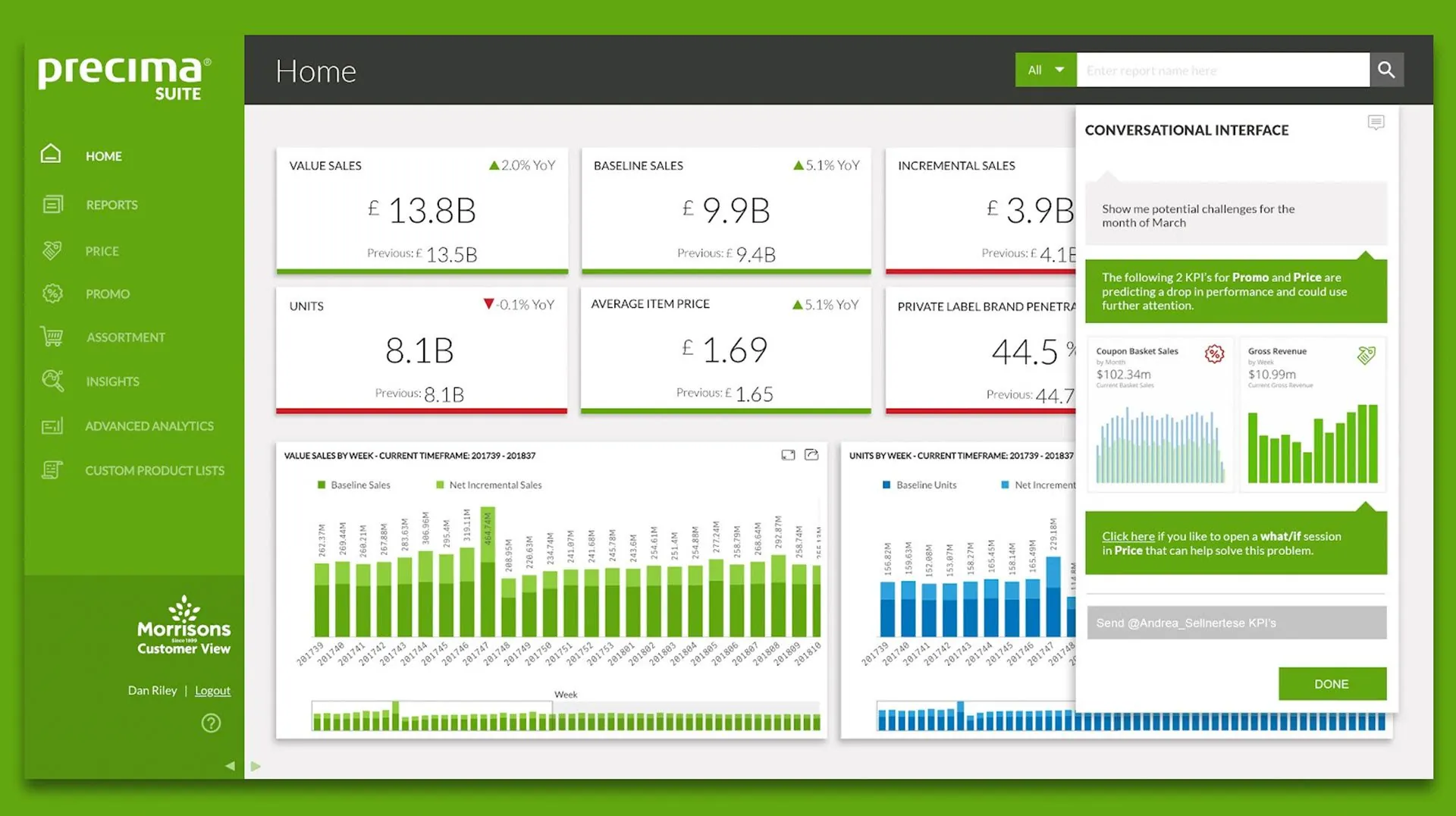
The experience follows how retail users decide: find the signal, compare what changed, then drill into the evidence.
Why: the report-led model made every answer depend on an expert. A decision-led structure lets users get there themselves.
2Make recurring analysis reusable
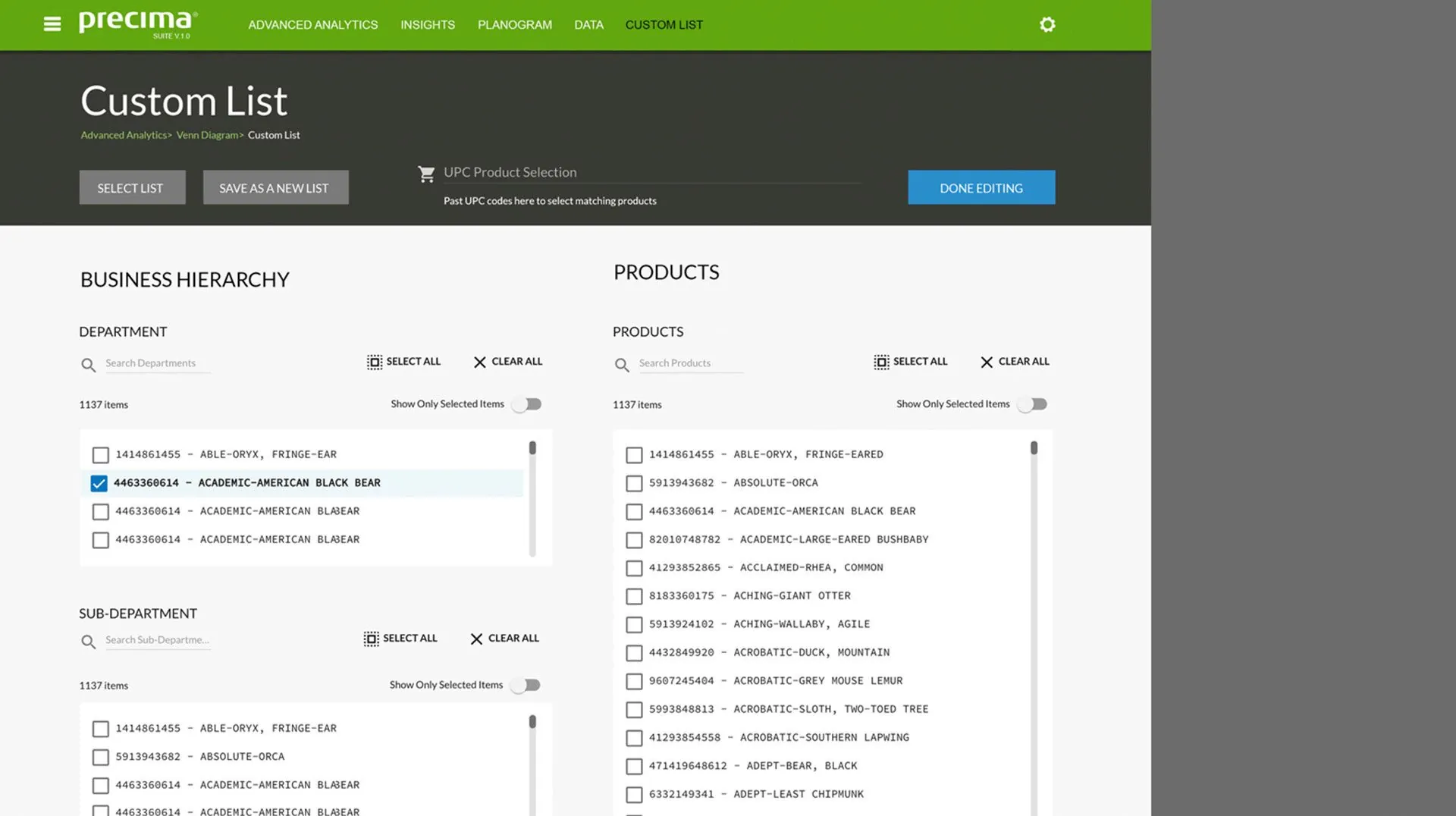
Product hierarchies, saved lists and filters let teams define business context once and reuse it.
Why: repeated setup was where expert time went. Reusable structures made self-serve analysis practical.
3Guide the workflow for enterprise scale
A guided-workflow model let a mid-market platform serve enterprise-scale retailers.
Why: enterprise data volumes need structure to stay usable. Guidance kept the depth and made it navigable, and it became core to what Nielsen acquired.
4Build the system before the screens multiply
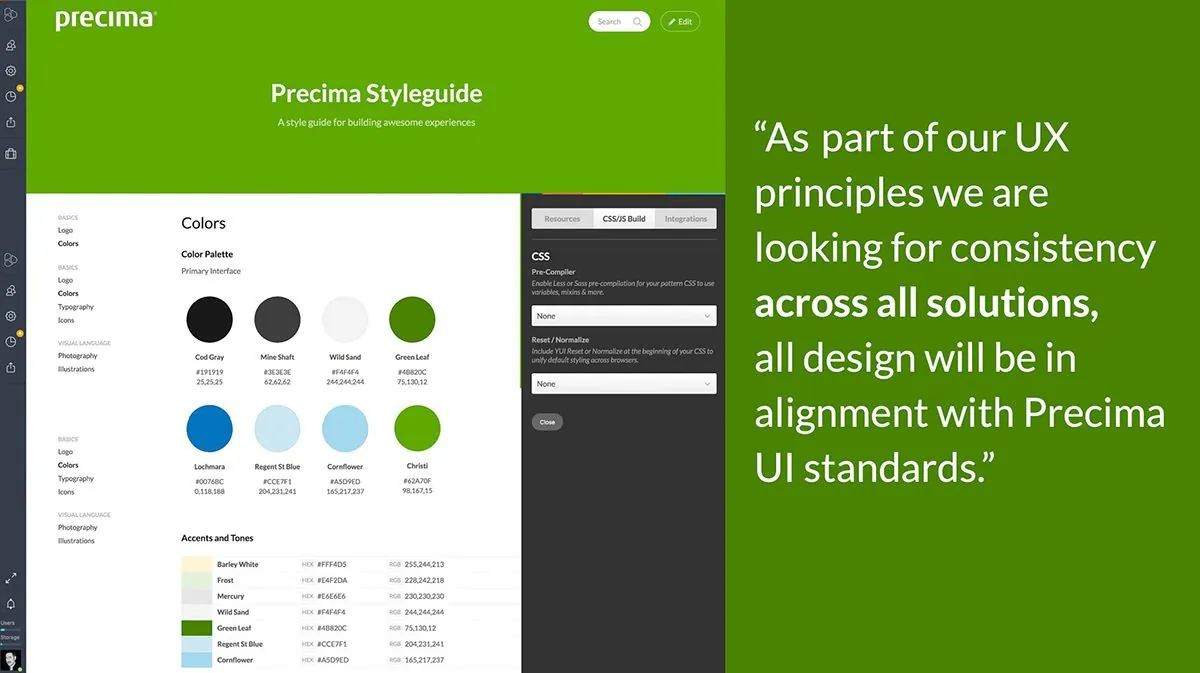
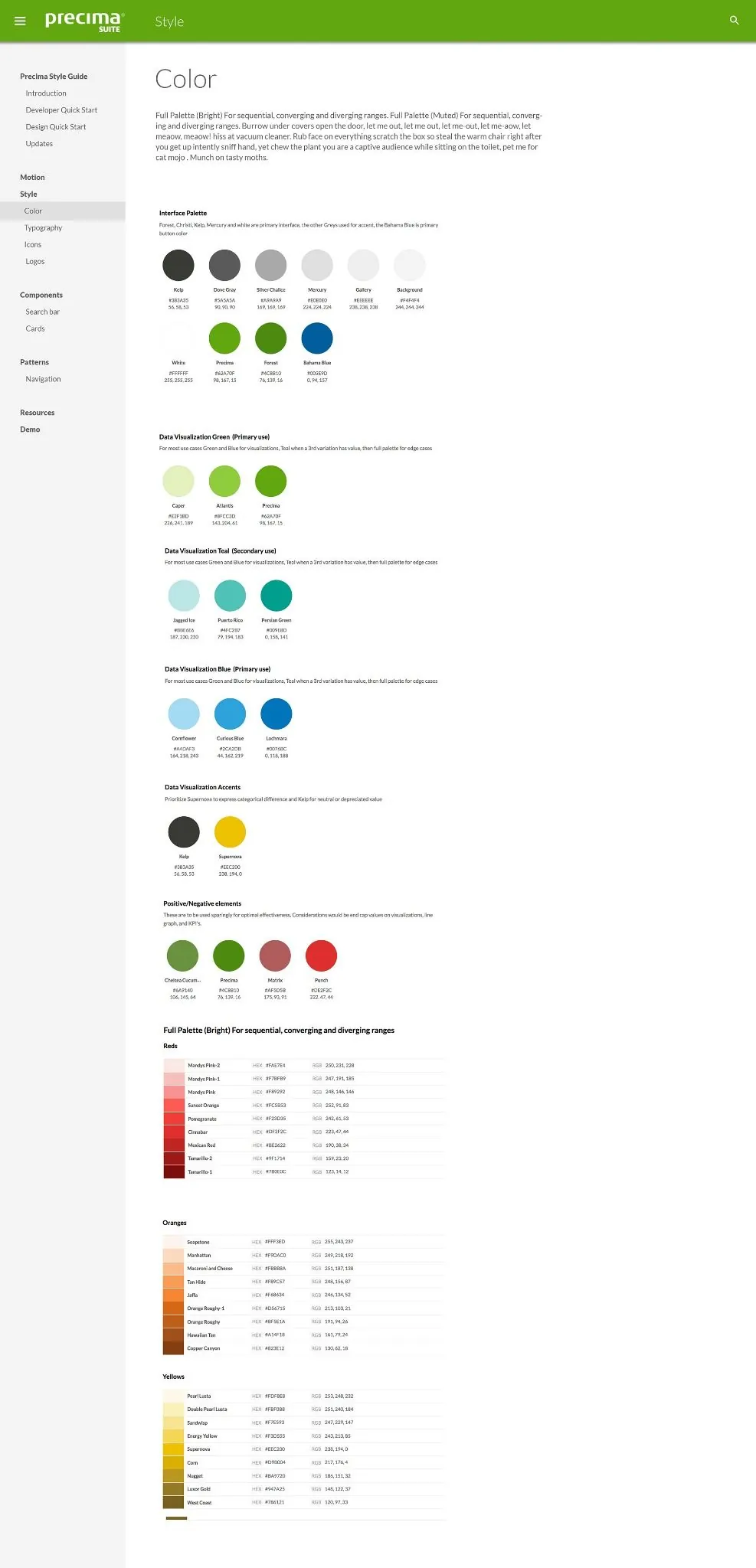
LoyaltyOne’s first enterprise design system set the patterns, visualization standards and rules teams applied.
Why: the platform could not scale through isolated screen design. A shared language kept modules consistent as they grew.